Category: Car Scene

Coverage of the Philippine automotive community, including car meets, aftermarket builds, enthusiast events, motorsport culture, and local automotive lifestyle stories.

  • LED Headlight Upgrades: Better Visibility Shouldn’t Blind Other Drivers

    LED Headlight Upgrades: Better Visibility Shouldn’t Blind Other Drivers

    On a recent night drive, an oncoming vehicle’s intense white headlights left me momentarily dazzled. The color alone could not tell me whether those lights were factory equipment or an aftermarket conversion. But the encounter brought up a concern worth discussing among Filipino motorists: when we upgrade our headlights, are we checking what they do to everyone else’s visibility?

    As a car guy, I understand wanting better lights. On an unfamiliar provincial road or a poorly illuminated stretch of highway, useful lighting is something you appreciate immediately. What I cannot get behind is treating the brightest-looking bulb as the best upgrade, without checking where its light actually goes.

    A headlight upgrade should help you see the road. It should not make the person approaching from the other direction struggle to see theirs.

    Photo by Carson Masterson on Unsplash

    “Plug-and-play” does not mean the beam is correct

    For an older vehicle with halogen headlights, an LED replacement can look like a straightforward improvement. The bulb fits, the connector plugs in, and the light appears whiter and brighter. That may establish physical and electrical compatibility, but it does not establish that the headlamp will produce the right beam.

    A headlamp is an optical system, not simply a container for a bulb. Its reflector, lens, and shielding work around a particular light source; changing that source can change how light is distributed. An SAE technical paper explains that headlights are designed around specific sources to provide useful illumination while controlling glare.

    That is why two LED bulbs with the same socket designation can perform differently—and why one bulb can behave differently in different headlamps. A 2019 study tested aftermarket H11 LED replacements in three low-beam headlamp units and found that none of the tested combinations met every measured photometric requirement. Some areas received insufficient light while others exceeded the permitted intensity, illustrating why apparent brightness is not enough.

    This does not mean every LED retrofit is unsuitable. Tested replacements exist for specific applications, but compatibility needs evidence beyond a seller saying that the bulb fits. OSRAM, for example, provides application and compatibility guidance—and explicitly recommends workshop headlight adjustment after installing its NIGHT BREAKER LED lamps. Its overseas approvals should not automatically be treated as Philippine authorization.

    The takeaway is more precise than “all LED bulbs need to be pointed lower.” Have the installation, beam pattern, and aim checked, then adjusted where required. If the bulb produces an unsuitable distribution, simply lowering the whole beam may sacrifice useful distance without resolving the underlying problem.

    Dark tint is not a reason to dazzle everyone else

    There is another part of this conversation we should not avoid: dark tint. Privacy and protection from the Philippine sun are understandable priorities, but the glass you look through remains part of your nighttime visibility. New Zealand’s transport agency specifically warns that tinted windows can reduce vision, particularly at night or in bad weather.

    If your windshield tint makes the road difficult to see, installing increasingly powerful headlights is not a sensible first response. The tint still reduces the light reaching your eyes, while other motorists receive the glare your headlights produce. You may be trying to solve a visibility problem inside your own vehicle by creating one outside it.

    Ask about visible light transmission, or VLT, rather than choosing tint solely by how dark it looks from outside. Higher VLT means more visible light passes through the filmed glass, while heat rejection is a separate performance measure. Films can provide heat rejection without requiring the darkest shade, so compare the specifications and prioritize a clear nighttime view.

    Photo by Dylan Calluy on Unsplash

    Upgrade responsibly—and check more than brightness

    Factory LED headlights should not be confused with an arbitrary LED bulb installed in a halogen housing. The factory system’s light source and optics are developed together, with beam distribution and glare control among the design requirements. That integration matters more than whether the light looks white, yellow, expensive, or fashionable.

    However, “factory LED” is not a promise that a headlight can never cause glare. The Insurance Institute for Highway Safety evaluates illumination and glare regardless of whether a system uses halogen, HID, or LED technology, and notes that every type has examples of poor performance. Correct aim and the condition of the complete system still matter.

    Before buying replacements, have a competent workshop inspect the existing headlights. Clouded lenses, damaged components, incorrectly seated bulbs, or poor aim deserve attention before another lighting technology enters the picture. Ask the installer to verify the proposed bulb’s suitability for your exact headlamp and check the finished low-beam pattern and alignment using the appropriate equipment and manufacturer procedure.

    Do not accept “we pointed them down” as the entire quality check. A projector lens is not an automatic guarantee of compatibility either, and an impressive photograph of light against a wall does not establish complete beam performance. If the proposed setup cannot provide useful visibility without excessive glare, reconsider the parts rather than expecting other road users to tolerate them.

    Responsible modification includes being willing to correct—or reverse—an upgrade that does not work properly. It also includes using low beams when approaching or following other traffic. Being enthusiastic about your own car should make you more attentive to how it affects the people sharing the road.

    Know what your headlight leveler actually does

    Some vehicles already provide a useful tool for controlling beam height: a manual headlight-leveling dial. Its main purpose is to compensate for changes in vehicle loading. Passengers and luggage can lower the rear of the vehicle, raising the nose and directing the low beams higher than intended.

    The numbered positions are therefore not simply settings for a bright street, a dark highway, or a mountain road. Hyundai’s owner guidance, for example, uses higher numbers to lower the beam as loading increases. Follow your own vehicle’s passenger-and-luggage settings, and make the adjustment safely before driving; do not assume another model’s dial positions apply to yours.

    A darker road is not a reason to raise the low beams above their correct aim. Use high beams when appropriate and return to low beams when other traffic requires it. The dashboard leveler also does not replace the workshop adjustment that establishes the headlamps’ correct baseline aim.

    Automatic leveling performs the compensation without the driver turning a dial. Some systems respond primarily to loading changes; dynamic versions can also react to body pitch during acceleration and braking. The technology has a long association with xenon/HID headlights, but it is not exclusive to them: Toyota Motor Philippines’ 2025 Hilux brochure, for example, lists LED headlights with automatic leveling on selected variants.

    Neither a projector lens nor a flagship badge proves that automatic leveling is fitted. Likewise, an “AUTO” position on the lighting switch usually refers to switching the headlights on and off according to ambient light—not adjusting their vertical aim. Automatic high-beam assistance is another separate function, so check what your particular vehicle actually has.

    Ultimately, the standard should be simple: better visibility for you, without unnecessarily compromising visibility for somebody else. I have nothing against a worthwhile headlight upgrade. But if the result helps you see while making your kasalubong struggle, the job is not finished.

    About the Author

    Kevin Peters

    Kevin, or Kev, is the Founder & Editor of Road Spec PH, a passion project born from a lifelong love of cars and automotive culture.

    Long before working in the Philippine automotive industry, Kevin was already the kid who collected toy cars, spent countless hours playing Gran Turismo, and proudly told anyone who would listen that he wanted to be a race car driver when he grew up. While that racing career never quite happened, the passion for cars never went away.

    When he’s not writing for Road Spec PH, you’ll probably find him playing racing simulators, adding to his die-cast car collection, or spending time with his 2016 Mitsubishi Lancer EX.

  • Nissan Frontier PRO-4X Named America’s Best Truck for “Tailgating” — Don’t Worry, It’s Not What Filipinos Think

    Nissan Frontier PRO-4X Named America’s Best Truck for “Tailgating” — Don’t Worry, It’s Not What Filipinos Think

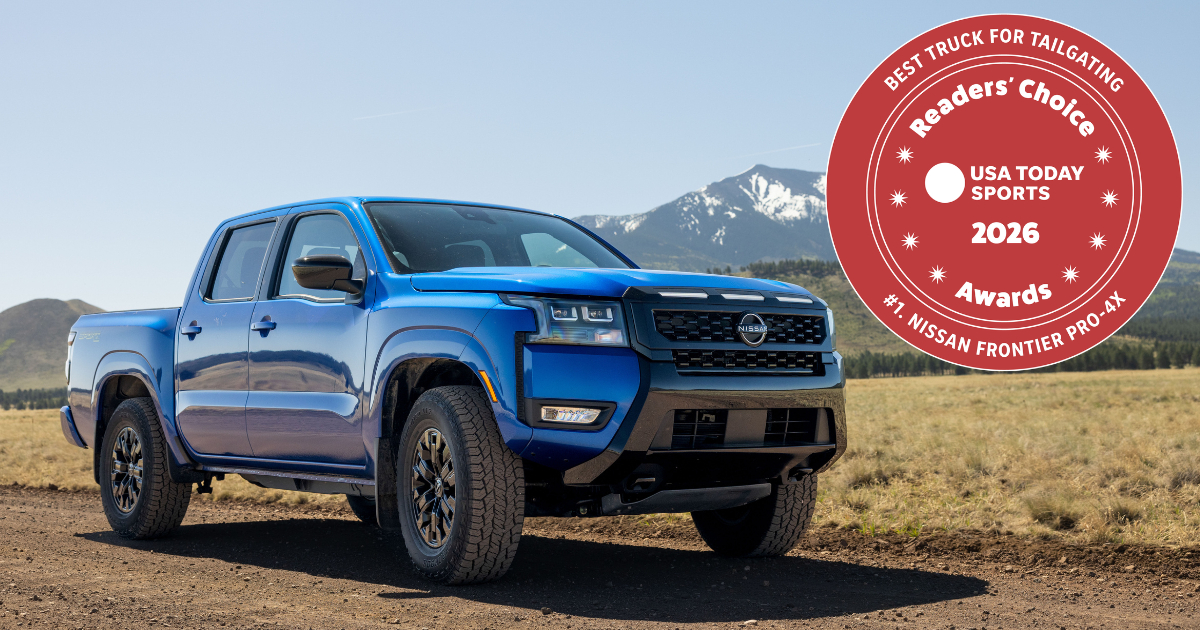
    If you are Filipino and you suddenly read that the Nissan Frontier PRO-4X has been named the #1 Best Truck for Tailgating, your first reaction might be a little confusing. After all, here in the Philippines, “tailgating” is something you’re supposed to avoid.

    It usually means driving too closely behind another vehicle, leaving insufficient stopping distance and potentially creating a dangerous situation on the road. So why is Nissan USA celebrating it?

    Well, there is a bit of an American English translation needed here.

    In America, Tailgating Is a Good Thing

    In the United States, particularly in the context of American football, tailgating refers to a social gathering held around a parked vehicle before a sporting event. Fans typically meet in parking lots before a game, open up the back of their pickup trucks or SUVs, bring food and drinks, set up chairs, grills and other equipment, and spend time with friends and fellow fans.

    Photo : Nissan USA

    In other words, it has very little to do with driving. It’s basically a pre-game party with a vehicle at the center of it. And according to the USA TODAY Sports Readers’ Choice Awards, the Nissan Frontier PRO-4X has come out on top as the Best Truck for Tailgating.

    Congratulations, Nissan — Just Don’t Do It on EDSA

    The award is actually a fitting recognition for what a pickup truck can offer outside of simply getting from one place to another.

    The Frontier PRO-4X is the off-road-oriented version of Nissan’s midsize pickup in the United States, giving it the sort of rugged image and utility that fits perfectly into the American outdoor and sporting lifestyle.

    The current Frontier is powered by a 3.8-liter V6 producing 310 horsepower and 281 lb-ft of torque, while the PRO-4X is positioned as the more adventure-oriented variant of the lineup. That combination of a pickup bed, rugged equipment and off-road capability makes it a natural candidate for the kind of outdoor gatherings that Americans call tailgating.

    So congratulations are certainly in order. Just don’t bring the American definition of “tailgating” to Philippine roads.

    The Frontier and Navara Connection Gets a Little Interesting

    For Filipino Nissan fans, the Frontier name may sound familiar for another reason. Nissan uses the Frontier name for its midsize pickup in the United States, while the same broader nameplate is marketed as the Navara in the Philippines and several other international markets.

    But despite sharing the family name and the PRO-4X branding, the U.S.-market Frontier PRO-4X and Philippine-market Navara PRO-4X are not the same pickup. AutoIndustriya previously compared the two models and pointed out that they have significant differences in their exterior and interior designs despite their shared lineage and similar positioning.

    The Philippine Navara PRO-4X currently uses a 2.5-liter turbo-diesel engine producing up to 190 PS and 450 Nm, along with a four-wheel-drive system and the familiar Navara platform. So while the names may look familiar, Filipino buyers shouldn’t assume that a U.S.-spec Frontier PRO-4X is simply a left-hand-drive version of our Navara PRO-4X.

    And Then There’s the Navara Pro PHEV

    Interestingly, Nissan Philippines may have already given us a glimpse of where its pickup strategy could be heading next.

    At the 2026 Philippine International Motor Show, Nissan Philippines previewed the Navara Pro PHEV, an electrified pickup that immediately stood out among the vehicles displayed at the event. The vehicle is particularly interesting because the model is known as the Frontier Pro in China, rather than the same Frontier sold in the United States.

    Photo : Kevin Peters | Road Spec PH

    Top Gear Philippines described the Navara Pro shown at PIMS as essentially a renamed Frontier Pro, while other reports have identified it as a China-developed model created through Nissan’s partnership with Dongfeng. Nissan Philippines itself has not yet provided all the details surrounding its eventual local launch, so there is still plenty that remains to be confirmed.

    For now, we’ll leave that story for another day. But considering that Nissan has already shown the Navara Pro PHEV to the Philippine public, it certainly makes the Frontier PRO-4X’s latest American award a little more interesting from our perspective.

    From Tailgating to Electrification

    On one side of the Nissan family, the Frontier PRO-4X in the United States has just been recognized as America’s #1 truck for tailgating — essentially celebrating its suitability as a mobile base for food, friends, sports and outdoor activities.

    On the other side of the world, Nissan Philippines is preparing to introduce a very different kind of pickup to Filipino buyers.

    The Navara Pro PHEV previewed at PIMS represents Nissan’s move into the plug-in hybrid pickup segment, something AutoIndustriya described as the company’s entry into the electrified pickup market locally.

    One is about enjoying a truck before a football game. The other could soon be about bringing electrification into the Philippine pickup market. And honestly, we’d take either.

    Just remember:

    If you’re in America, tailgating might mean firing up the grill beside your Frontier.

    If you’re in the Philippines, please don’t fire up the brakes by following another vehicle too closely.

    Congratulations to Nissan and the Frontier PRO-4X on the USA TODAY recognition.

    And for Filipino Nissan fans, we’ll be keeping an eye on that other Frontier-derived pickup that recently appeared wearing a Navara badge at PIMS. Because if Nissan’s latest electrified pickup makes its way onto Philippine roads soon, we may have an entirely different Nissan truck story to talk about.

    About the Author

    Kevin Peters

    Kevin, or Kev, is the Founder & Editor of Road Spec PH, a passion project born from a lifelong love of cars and automotive culture.

    Long before working in the Philippine automotive industry, Kevin was already the kid who collected toy cars, spent countless hours playing Gran Turismo, and proudly told anyone who would listen that he wanted to be a race car driver when he grew up. While that racing career never quite happened, the passion for cars never went away.

    When he’s not writing for Road Spec PH, you’ll probably find him playing racing simulators, adding to his die-cast car collection, or spending time with his 2016 Mitsubishi Lancer EX.

  • Did You Know? Nissan’s Brake Caliper Colors Actually Mean Something

    Did You Know? Nissan’s Brake Caliper Colors Actually Mean Something

    It’s not just for looks—those colorful brake calipers tell a story.

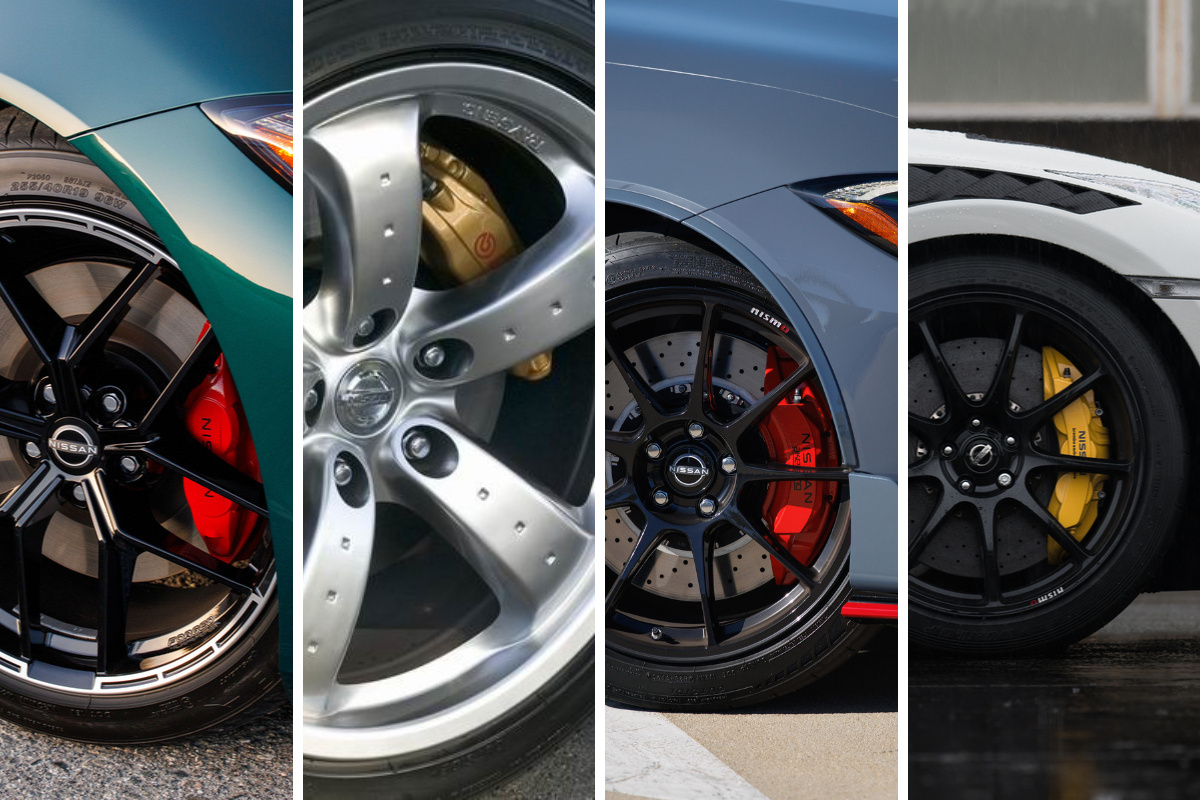
    If you’ve ever wondered why some Nissan performance cars wear silver, red, gold, or even yellow brake calipers, it turns out there’s more to them than just visual appeal.

    Nissan has officially revealed that its brake caliper colors follow a performance hierarchy, giving enthusiasts a quick visual clue about the braking system fitted to each vehicle.

    Starting with silver, these are typically found on Nissan’s standard braking systems designed for everyday driving.

    Most Nissan vehicles, like the 2026 Nissan Kicks pictured here, feature silver brake calipers.

    Step up to red, and you’re looking at upgraded performance brakes, such as the Akebono-equipped Nissan Z Performance.

    The 2027 Nissan Z (US-Spec) features red brake calipers behind 19-inch RAYS® forged-alloy wheels.

    Things get even more exclusive with the bright red calipers found on the latest Nissan Z NISMO. According to Nissan, these not only distinguish the flagship Z variant but also feature a higher heat-resistant coating to withstand more demanding driving conditions.

    The 2027 Nissan Z NISMO (US-Spec) features bright red Akebono brake calipers.

    For many enthusiasts, however, gold has always been the most recognizable. Nissan confirms that gold calipers have traditionally been reserved for models equipped with Brembo braking systems, a color that has become synonymous with iconic performance cars like the Skyline GT-R and GT-R.

    The 350Z Track Edition (US-Spec) featured gold Brembo brakes. 2006 model pictured.
    The R34 V-Spec II featured gold Brembo brake calipers.

    At the very top of the hierarchy sits yellow, which generally signifies Nissan’s most advanced carbon-ceramic braking systems found on select high-performance GT-R variants.

    Brembo carbon ceramic brakes with distinct yellow calipers were available on the 2020 Nissan GT‑R Track Edition.

    While Nissan notes that a few special editions have broken the pattern over the years, the color system has largely remained a subtle way of communicating a vehicle’s braking capability without saying a word.

    Special editions and exceptions

    At times, concept or special-edition vehicles have used brake caliper colors that bucked the traditional coloring rules:

    • The 2020 GT‑R-50 by Italdesign featured special red Brembo calipers. Nissan vehicles with Brembo brakes typically feature gold calipers.
    Red Brembo brakes on the 2020 GT‑R-50 by Italdesign.
    • The 2023 Z Proto Spec featured yellow Akebono calipers. While high-performance brakes, they were not carbon ceramic.
    The current-generation Z launched for the 2023 model year with a special Proto Spec, which featured yellow Akebono calipers.

    For enthusiasts, it’s one of those small details that becomes impossible to unsee once you know the meaning behind it. So the next time you spot a Nissan performance car, take a quick look behind the wheels—you might be able to tell just how serious its braking hardware is before the driver even starts the engine.

  • UNITY Car Meet & Track Day Returns to Clark This July 19

    UNITY Car Meet & Track Day Returns to Clark This July 19

    Second Skin Industries celebrates its 7th anniversary with one of the country’s biggest enthusiast gatherings.

    Philippine automotive enthusiasts are in for an exciting weekend as Second Skin Industries, together with One Way Autohaus and Classic Speed, gears up for the UNITY Car Meet & Track Day happening on July 19, 2026, at Clark International Speedway in Pampanga. The event also serves as the celebration of Second Skin Industries’ 7th anniversary, bringing together car culture, motorsport, and the aftermarket community under one roof.

    Running from 8:00 AM to 5:00 PM, the event promises a full day of premium automotive displays, spirited track sessions, and an opportunity for enthusiasts to experience high-performance machines in a safe, controlled environment. According to the organizers, visitors can expect everything from modified JDM icons and European sports cars to classic restorations and exotic supercars filling the paddock.

    Unlike a traditional static car meet, UNITY also gives participating drivers the chance to stretch their cars’ legs around the Clark International Speedway, one of the country’s premier racing circuits. The venue has long been known as a favorite destination for track day enthusiasts and motorsport events, making it the perfect backdrop for a gathering centered around performance driving.

    Another highlight of this year’s event is the participation of the Land Transportation Office (LTO), which will deploy its mobile service bus at the venue. Attendees will be able to access selected government services such as driver’s license renewals, vehicle registration renewals, and other transactions without leaving the event grounds.

    Several automotive brands and industry partners are also backing the event, including BYD, Motul, Shell V-Power, Nissan, Mazda, GWM, Mitsubishi Motors, and Zeekr, among many others. Their presence is expected to add even more attractions throughout the day, alongside sponsor booths and lifestyle displays.

    Admission is priced at ₱200 per person, making it an accessible weekend destination for enthusiasts, photographers, and families looking to experience the local automotive scene.