
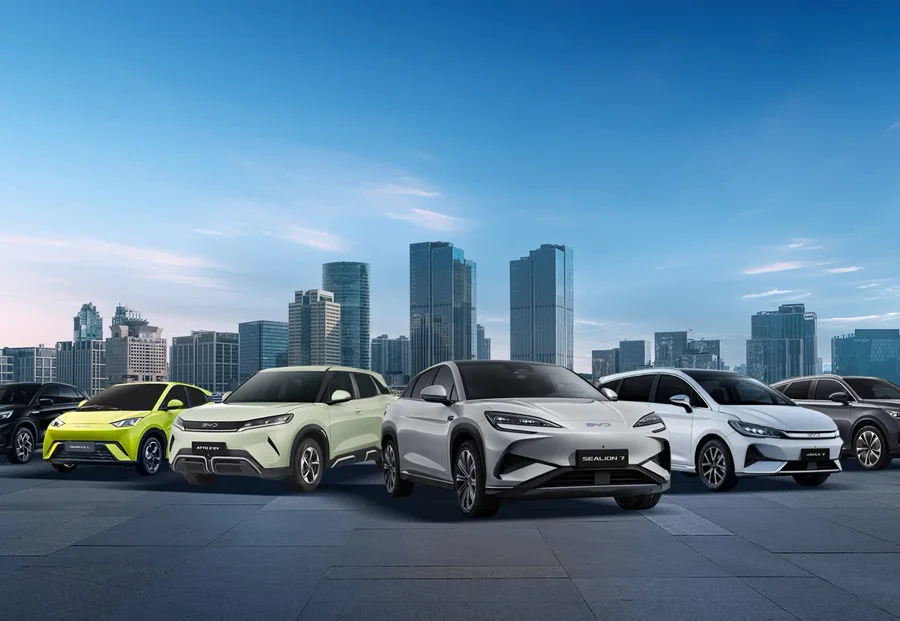
BYD Cars Philippines says it has already sold more vehicles in the first eight months of 2026 than it did during the entirety of last year.
According to figures released by the company, BYD recorded 28,399 retail sales from January through August 2026, up 99 percent year-on-year and already ahead of the 26,122 units it reported for full-year 2025. August alone accounted for 4,682 vehicles.
Those are significant numbers for a brand that was still a relatively small player in the Philippine market only a few years ago. But there is an important distinction to make: the latest figures come directly from BYD Cars Philippines itself.
DM-i models are doing most of the work
BYD reports that 22,555 of its January-to-August sales came from its DM-i plug-in hybrid models, compared with 5,844 battery-electric vehicles. The Sealion 6 DM-i remains its best-selling model with 7,759 units reported during the period.

That suggests BYD’s rapid Philippine growth is being driven largely by vehicles that combine electric driving with the flexibility of a gasoline engine, rather than pure EVs alone. It is a particularly relevant distinction in a market where charging access can still vary significantly depending on where a buyer lives or travels.
The company’s expanding dealership footprint also makes its growth increasingly visible. BYD says it now has 81 dealerships nationwide, while seeing its vehicles on the road—particularly around Metro Manila and neighboring Luzon provinces—is becoming considerably less unusual than it was just a few years ago.
But how do we compare the numbers?
BYD is not a member of the Chamber of Automotive Manufacturers of the Philippines, which means its sales are not included in the usual CAMPI-TMA member breakdowns often used to rank the country’s largest automotive brands.
There has been an important change, however. Mobility Access Philippines Ventures Inc., BYD’s Philippine distributor, formally joined the Association of Vehicle Importers and Distributors in June 2026. BYD Cars Philippines Managing Director Bob Palanca also took a leadership role within the organization.

That makes the transparency question different from what it was before. The issue is no longer why BYD remains outside both of the country’s major automotive industry groups—it doesn’t.
Instead, with BYD now large enough to potentially sit among the country’s top-selling brands, it would benefit buyers and the industry if its sales could regularly be presented alongside competing brands using the same reporting period and methodology. The 28,399-unit figure may ultimately prove completely accurate, but a manufacturer announcing its own performance is not the same thing as seeing those numbers consistently presented in a broader industry report.
Earlier this year, there was at least some outside context. At the 2026 AVID Summit, PwC Automotive ASEAN cited BYD at 13,723 units through April and a 9.4-percent share of the Philippine market, enough to place it third at the time.
BYD’s growing presence on Philippine roads makes its rise difficult to dismiss. Now that it has joined AVID, clearer and more consistent apples-to-apples reporting would make that growth easier to measure as well.