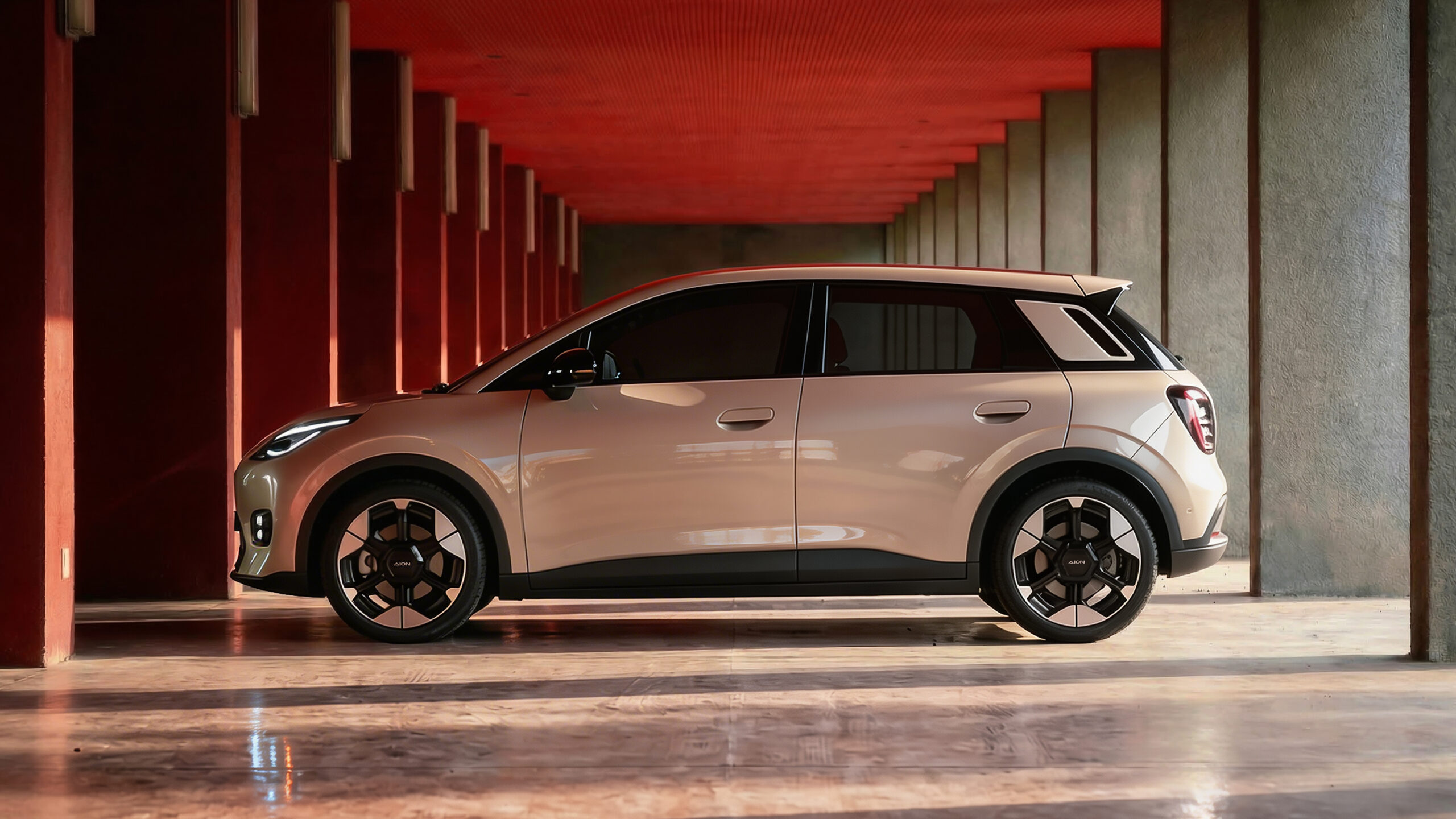
GAC Philippines has announced that the GAC AION UT earned a five-star rating in Euro NCAP’s 2026 safety assessment. The electric hatchback was among three Chinese models awarded five stars in the testing organization’s September 2 results. Locally, GAC is offering the Aion UT Elite at an introductory price of ₱998,000 until September 30, 2026.
How the AION UT performed
The AION UT was assessed under Euro NCAP’s updated 2026 protocols, which examine safety across four stages:
Assessment area
Score
Safe Driving
66%
Crash Avoidance
74%
Crash Protection
91%
Post-Crash Safety
88%
Euro NCAP reported strong performance from the car’s autonomous emergency braking system and awarded maximum points for rear-seat child protection in the frontal offset test. It also noted a center airbag designed to reduce contact between occupants during side impacts. However, the assessment identified weaknesses, including marginal chest protection for the small female driver in the full-width crash test and insufficient physical controls for key driving functions.
GAC’s release also highlights a body structure comprising 71% high-strength steel and a seven-airbag system. These are relevant engineering details, although the independent test results provide a more useful measure of how the assessed vehicle performs.
For Philippine buyers, the rating’s scope deserves attention: Euro NCAP identifies Premium and Luxury versions, with Premium as the tested variant. The locally marketed Elite is not explicitly listed, so equivalence with the assessed specification still needs confirmation.
Philippine price and availability
According to GAC Philippines, the AION UT Elite’s ₱998,000 introductory price represents a ₱70,000 reduction from its ₱1,068,000 suggested retail price. The offer runs until September 30, 2026, with reservations open through GAC dealerships nationwide. The Philippine Elite uses a 100 kW electric powertrain driving the front wheels.
The result gives prospective buyers useful independent safety information alongside the car’s price and equipment. Confirming which tested safety features are fitted to the Philippine Elite would make that information more directly useful when comparing locally available electric hatchbacks.
GAC International Philippines has shared the experiences of two GAC AION V owners who used their electric SUVs for inter-island travel, including one journey covering 1,492 kilometers across Luzon, Visayas, and Mindanao. Featured in the brand’s Life With GAC campaign, the accounts describe how charging stops and ferry crossings fitted into their trips. They offer a practical look at traveling beyond the usual urban routes in an electric vehicle.
A 1,492-kilometer journey with charging stops
AION V owner Romel Emperado completed the longer journey, passing through Samar and Leyte, where GAC says public charging infrastructure is still developing. He reported average energy consumption of 13.9 kWh/100 km while maintaining cruising speeds of 80–100 km/h, using regenerative braking, and selecting the vehicle’s power-saving mode. That figure is an owner-reported trip average rather than an independently verified efficiency test.
Emperado planned his charging around breaks and overnight stays, avoiding driving at night. “We just hung out at malls or slept at Airbnbs while the car charged,” he said in GAC’s release. The 1,492 km figure therefore represents the total journey, not the distance covered on a single charge.
Taking an electric SUV from Cebu to Mindanao
Another owner, Rommel Laranjo, used his AION V for a family journey from Cebu to Mindanao involving two roll-on/roll-off ferry passages. According to GAC, he arrived home with 36% battery remaining and a reported remaining-range estimate of 183 km, despite using the air conditioning throughout the day. The release does not specify his total trip distance or provide a complete charging itinerary.
Laranjo also uses the electric SUV for a 34-kilometer daily commute, with home charging supplemented by a solar setup. He highlighted the ability to keep the cabin cool while waiting for ferry embarkation without an idling combustion engine producing exhaust. His reported savings reflect his household’s charging arrangements, however, rather than a cost figure that applies to every EV owner.
For Filipino buyers considering an electric SUV, the useful takeaway is how charging was incorporated into each journey. Destination stops and overnight accommodation gave the owners opportunities to replenish the battery, while ferry crossings connected the road sections. These experiences suggest that inter-island EV travel is achievable with preparation, although charging access along the intended route remains an important part of the plan.
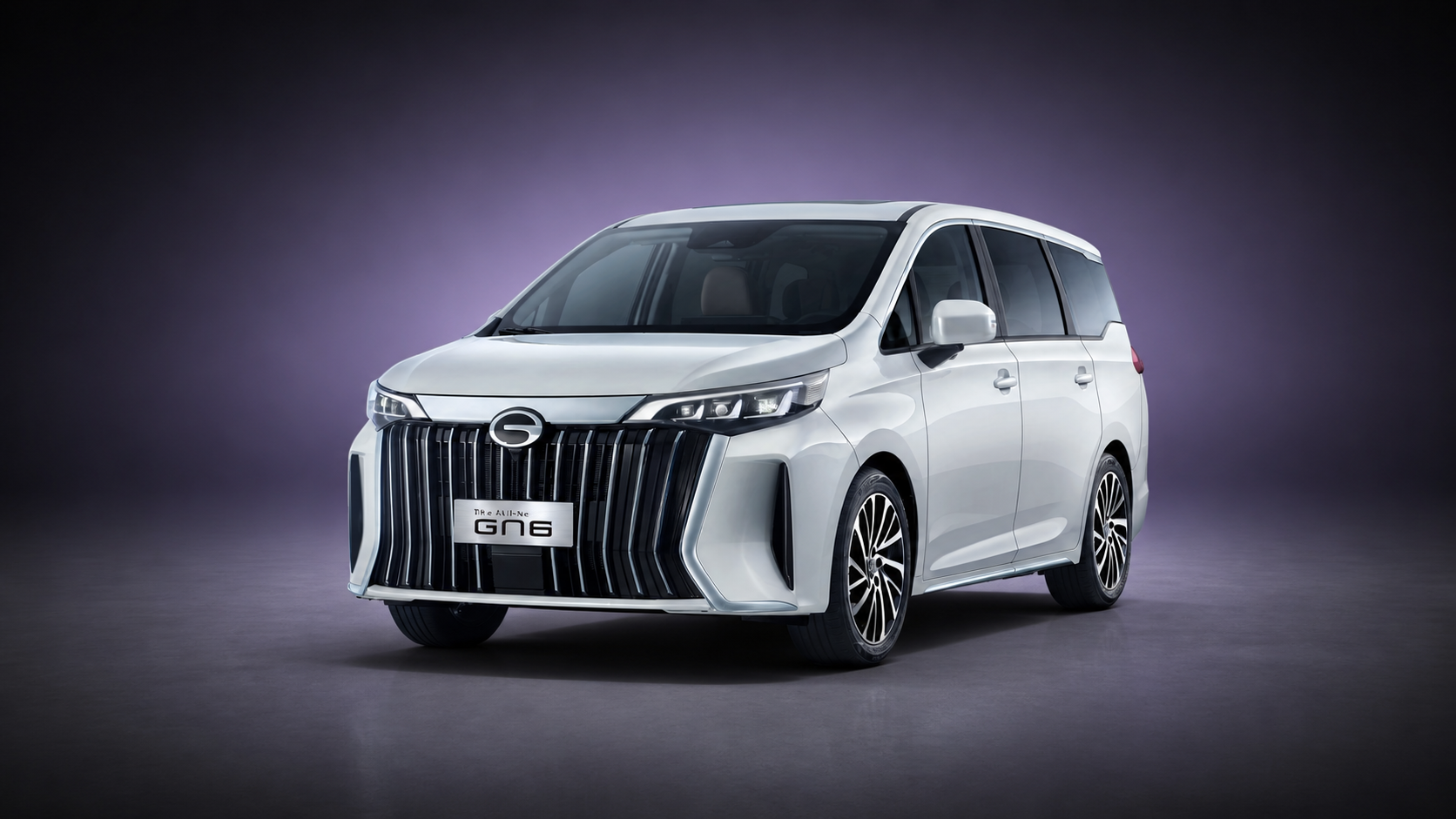
GAC Philippines has opened reservations for the all-new GAC GN6, positioning the seven-seat MPV as the most accessible member of its expanded local MPV family.
The GN6 will initially be offered in a single GX variant carrying a regular suggested retail price of ₱1,298,000. Customers who reserve one until September 30, 2026, can avail of an introductory price of ₱1,198,000—a ₱100,000 reduction from its regular SRP.
It joins the electrified GAC E8 HEV and the more premium GN8 PHEV Executive in the brand’s growing Philippine MPV lineup. Unlike those models, however, the GN6 sticks with a conventional turbocharged gasoline powertrain and focuses on delivering three-row practicality at a more accessible price.
Photo : GAC Philippines
One GX variant keeps the range simple
GAC Philippines is launching the GN6 in just one GX configuration.
That makes the buying process straightforward: customers do not have to compare several variants or determine which important features are reserved for a more expensive model. The tradeoff is that there is currently no lower-priced entry variant for buyers willing to give up some equipment, nor a higher trim for those looking for additional luxuries.
The distinction between the GN6’s regular and promotional prices is also important. The ₱1,198,000 figure gives the MPV a stronger introductory value proposition, but it applies only to qualifying reservations made until September 30. Unless GAC extends or replaces the promotion, the vehicle’s regular price remains ₱1,298,000.
Photo : GAC Philippines
Designed as a practical seven-seat family MPV
The all-new GN6 measures 4,792 mm long and rides on a 2,810 mm wheelbase. Its cabin accommodates seven occupants across three rows, using individual captain’s seats with armrests in the second row and a three-seat rear bench.
Captain’s seats can make longer journeys more comfortable for second-row passengers, although the arrangement also means access between the second and third rows becomes an important consideration for families. GAC says the GN6 has been designed to make entry and exit easier for children, elderly passengers, and occupants with limited mobility.
Behind the third row is a claimed 324 liters of luggage capacity. When more cargo room is required, the third-row seats can fold completely into the luggage floor, producing a flat loading area and expanding capacity to as much as 1,100 liters.
This flexibility should allow the GN6 to move between passenger and cargo duties without requiring the third-row seats to be physically removed. It is particularly relevant for families carrying strollers, sports equipment, groceries, or luggage during longer trips.
Cabin comfort equipment includes dual-zone automatic climate control, a PM1 air filter, and a power sunroof.
Photo : GAC Philippines
Large displays anchor the cabin
The dashboard is built around a 14.6-inch touchscreen display paired with a 10.25-inch digital instrument cluster.
These are substantial screens for a family vehicle at this price point, but their usefulness will ultimately depend on the responsiveness of the infotainment system, the clarity of its interface, and how easily frequently used functions can be accessed while driving.
The combination of the two displays, second-row captain’s seats, dual-zone climate control, air filtration, and a fold-flat third row suggests that GAC has concentrated the GX specification around the features families are likely to notice and use regularly.
Photo : GAC Philippines
Turbocharged gasoline power with a wet DCT
Power comes from a 1.5-liter turbocharged gasoline engine producing 176.7 hp and 270 Nm of torque. It is paired with a seven-speed wet dual-clutch transmission.
The 270 Nm output should be especially relevant in a three-row MPV, where carrying seven occupants and their luggage can place considerably greater demand on the powertrain than driving with only one or two people aboard.
GAC quotes a WLTC combined fuel-consumption figure of 7.22 liters per 100 kilometers, equivalent to approximately 13.9 km/L. As with any laboratory-derived consumption figure, actual efficiency will depend on traffic, driving style, passenger load, road conditions, and climate-control use.
The conventional gasoline setup also avoids the charging requirements of a plug-in vehicle. That may appeal to families that regularly travel beyond Metro Manila or do not have reliable access to charging at home.
Photo : GAC Philippines
Level 2 driver assistance comes standard on the GX
The GN6 GX is equipped with what GAC describes as a Level 2 advanced driver-assistance system.
Its listed driver-support features include Adaptive Cruise Control, Traffic Jam Assist, Integrated Cruise Assist, Automatic Emergency Braking, Forward Collision Warning, Lane Keeping Assist, and Lane Departure Warning.
A high-definition 360-degree panoramic camera is also included, providing a clearer view of the vehicle’s surroundings when parking or maneuvering through narrow streets and confined spaces.
Level 2 assistance does not make the GN6 autonomous. The driver must remain attentive, keep control of the vehicle, and be prepared to intervene at all times. Nevertheless, making these systems available on the sole GX variant gives every GN6 buyer access to the same advertised driver-assistance package.
Photo : GAC Philippines
Two exterior colors at launch
The all-new GAC GN6 is available in Pearl White and Classic Black, both paired with an all-black interior and black headliner.
The two-color selection keeps the ordering process simple, but it is notably limited for a family vehicle. Buyers looking for silver, gray, blue, or a more expressive exterior finish will not find those choices in the initial Philippine lineup.
White and black are safe, widely accepted colors, but expanding the palette later could help GAC appeal to customers who want greater personalization.
Actual unit may vary.
Warranty and nationwide support
Every GN6 is covered by a five-year or 150,000-kilometer vehicle warranty, whichever comes first. GAC Philippines also includes two years of free roadside assistance.
The company says owners will be supported by its nationwide network of 30 dealerships and a dedicated local parts warehouse. According to GAC, the warehouse is intended to maintain a more stable supply of genuine parts and help shorten service turnaround times.
Reservations are now accepted at GAC dealerships nationwide.
Photo : GAC Philippines
Is the all-new GN6 worth considering?
On paper, the all-new GN6 packages several desirable family-oriented features into one specification: seven seats, second-row captain’s chairs, a fold-flat third row, large cabin displays, a turbocharged engine, a 360-degree camera, and a broad suite of driver-assistance systems.
The single-variant strategy makes the lineup easy to understand, while its gasoline powertrain should be familiar and convenient for families that travel across areas where charging infrastructure remains inconsistent.
Its introductory ₱1,198,000 price makes the package more compelling, although buyers should remember that this is a limited offer rather than the vehicle’s permanent SRP. At the regular ₱1,298,000 price, its value will depend on how its cabin quality, infotainment system, ride comfort, real-world fuel economy, and fully loaded performance compare with other seven-seat choices.
For now, the GN6 gives GAC Philippines a more accessible entry into the family-MPV market—and provides buyers with a well-equipped alternative that places space, flexible seating, and driver assistance at the center of the package.