Mitsubishi is returning to the local PHEV market while Nissan prepares to launch a new Kicks e-POWER — but both vehicles also raise questions about how Japanese brands are approaching electrification in the Philippines. August 2026 is shaping up to be an interesting month for electrified vehicles in the Philippines.
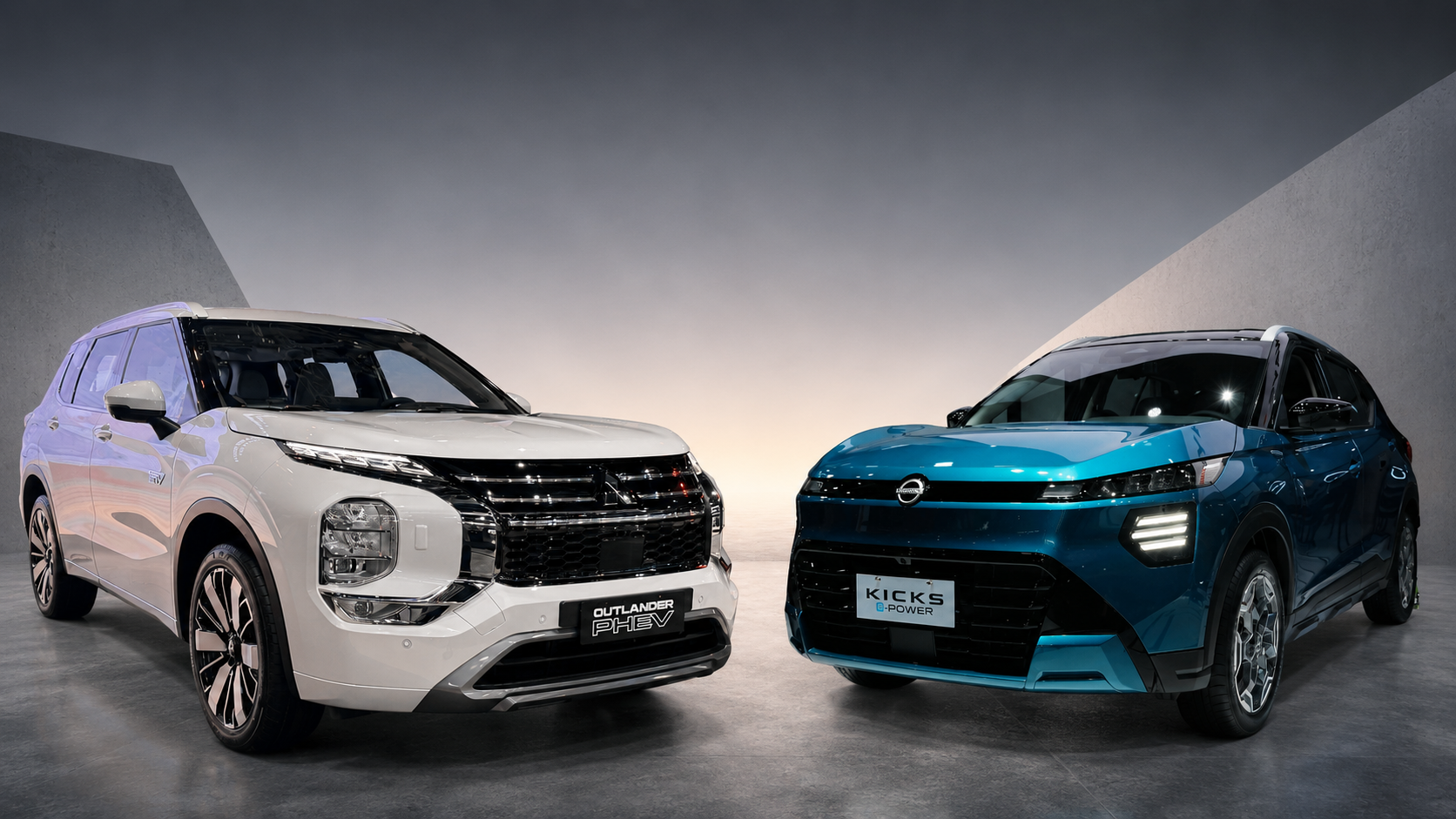
Two Japanese manufacturers are preparing to introduce new electrified crossovers to the local market: Mitsubishi Motors Philippines Corporation (MMPC) with the Outlander PHEV, and Nissan Philippines with the all-new Kicks e-POWER.
While the two vehicles use different approaches to electrification, their upcoming launches represent two notable developments for their respective brands — Mitsubishi’s return to the local plug-in hybrid market, and Nissan’s expansion of its e-POWER lineup.
Mitsubishi Returns to the PHEV Market
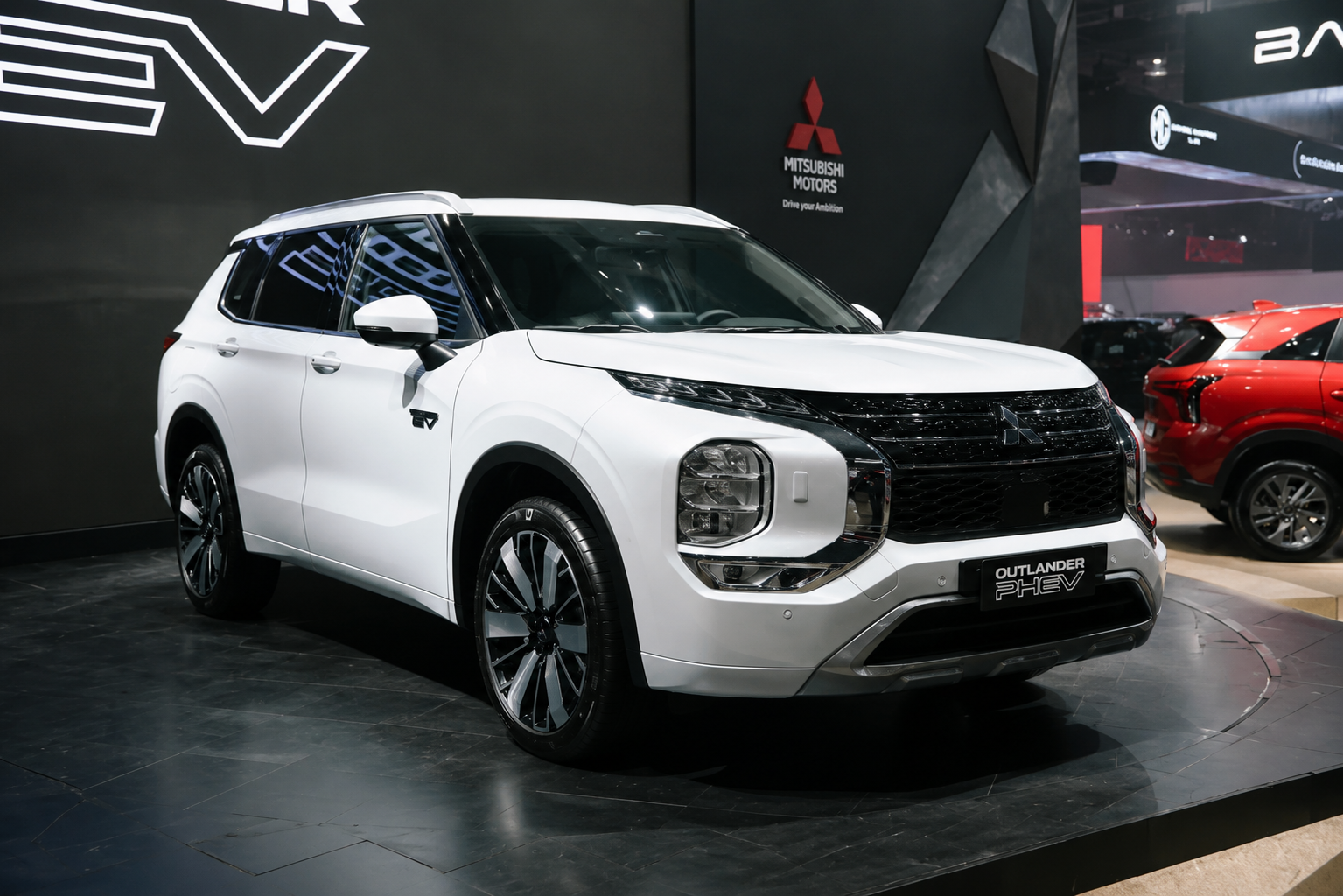
Mitsubishi Motors Philippines is scheduled to formally launch the Outlander PHEV on August 20, 2026, following its Philippine preview at the 10th Philippine International Motor Show in June. The launch is expected to reveal the local model’s pricing, variants and final equipment.

The fourth-generation Outlander PHEV uses a 2.4-liter gasoline engine paired with two electric motors, producing a combined 302 hp and 450 Nm. It also uses Mitsubishi’s Super All-Wheel Control system and offers multiple drive modes. Mitsubishi claims an EV-only driving capability of around 100 kilometers for the version shown at PIMS 2026. For MMPC, however, the significance of the launch goes beyond simply adding another SUV to its lineup.
The Outlander PHEV effectively represents Mitsubishi’s return to the Philippine electrified market after the company previously sold the third-generation Outlander PHEV locally. That earlier model arrived in the Philippines in 2020 with a 2.4-liter gasoline engine and twin-motor all-wheel-drive system. It was priced at around ₱2.998 million, putting it well above many of Mitsubishi’s more mainstream products.
The previous Outlander PHEV was an interesting product for its time, but the local market was considerably less receptive to electrified vehicles. In 2021, Philippine automotive publications were already pointing out that hybrid and electric vehicle sales remained extremely small compared with conventional gasoline-powered vehicles.
A year later, Top Gear Philippines conducted an actual electric-range test of the Outlander PHEV and encountered some of the infrastructure challenges that EV and PHEV owners faced at the time. The available charging stations did not always have compatible connectors, while charging infrastructure remained limited. The publication ultimately managed nearly 38 kilometers of electric driving even though the vehicle was only charged to 80 percent for the test.

The same publication later described the previous Outlander PHEV as a vehicle that did not attract a large number of local buyers, noting that its nearly ₱3-million price placed it in a difficult position against more conventional Mitsubishi SUVs.
It would therefore be tempting to describe the first Philippine Outlander PHEV as a commercial failure. However, there are no publicly available sales figures that allow us to conclusively make that claim. What can be established is that the previous model eventually disappeared from the local lineup, and that it entered a market where electrified vehicles were still far from mainstream.
The market has changed since then
The circumstances surrounding the fourth-generation Outlander PHEV are different. The Philippine market now has a much larger selection of hybrids, PHEVs and battery-electric vehicles, while charging infrastructure has also expanded. More importantly, electrification is no longer limited to a handful of premium or niche models. Mitsubishi itself is also preparing for a larger electrification push.

In July, MMPC reaffirmed its commitment to the government’s Electric Vehicle Incentive Strategy (EVIS) program and confirmed a ₱7-billion investment commitment from Mitsubishi Motors Corporation. The company has previously said local hybrid production could begin as early as 2028 at its Santa Rosa, Laguna plant, although the specific hybrid model has yet to be identified.
That makes the Outlander PHEV an interesting first step. It is not the locally manufactured hybrid Mitsubishi has promised, but it does put an electrified Mitsubishi product back into the Philippine market ahead of that potential production program.
Nissan Takes a Different Route With the Kicks
Nissan Philippines is also preparing for an August launch, with the all-new Kicks e-POWER scheduled to make its local debut on August 28.

The vehicle was already previewed at PIMS 2026 after making its ASEAN debut in Thailand earlier this year. Nissan Philippines subsequently opened reservations for the new Kicks in July. Nissan’s Philippine website currently lists the new Kicks as an upcoming model with 136 PS and 280 Nm, while highlighting its e-POWER system and 100-percent electric motor-driven propulsion.
Unlike a conventional hybrid, the e-POWER system uses the gasoline engine primarily to generate electricity, with the electric motor driving the wheels. This means the driving experience is closer to that of an EV in terms of how the vehicle delivers power, while the driver does not need to plug the vehicle into a charger.

The current-generation Kicks e-POWER has been part of the Philippine market since 2022 and has been one of Nissan’s main local examples of electrification. AutoDeal previously described the system as combining an internal-combustion engine, battery and electric motor, with the electric motor responsible for driving the vehicle.
The new Kicks therefore isn’t Nissan’s first attempt at e-POWER in the Philippines. Instead, it is the next-generation evolution of a technology Nissan has already introduced to Filipino buyers.
But There’s Something Different About Our Kicks
There’s an interesting detail about the new Kicks that Filipino buyers might notice when looking at international reviews. The Kicks coming to the Philippines is not exactly the same Kicks currently sold in the United States and Japan. The distinction became particularly obvious in June when Nissan launched the latest Kicks in Japan.

Top Gear Philippines compared the Japanese version with the ASEAN-market Kicks that was previewed at PIMS 2026. Although both carry the Kicks name and use e-POWER technology, they are mechanically different. The Japanese version uses a 1.4-liter gasoline engine as part of its e-POWER system and produces 143 hp and 315 Nm.
The ASEAN version destined for markets such as the Philippines uses a smaller 1.2-liter three-cylinder engine and produces 134 hp and 280 Nm. The Japanese Kicks can also be equipped with Nissan’s e-4ORCE all-wheel-drive system, adding a rear electric motor. The ASEAN model, meanwhile, is configured differently.
This isn’t necessarily a case of the Philippines receiving an “old” Kicks. The ASEAN Kicks is a different regional product designed around different market requirements. But it does raise an understandable question:
Why doesn’t Nissan simply bring the newest Kicks sold in Japan or the United States?
There is no official Nissan Philippines statement saying that a particular reason is responsible for this product strategy. Therefore, it would be speculation to say that Nissan chose the ASEAN Kicks specifically because of pricing, manufacturing costs, local regulations or other factors. What we do know is that Nissan operates with different regional product strategies, and the Kicks is a good example of this.

Kevin Peters | Road Spec PH
The same broader phenomenon can also be observed with Nissan’s other global nameplates, including the X-Trail, where specifications and powertrains can vary between markets. For Nissan Philippines, the regional Kicks also fits neatly into the company’s existing electrification strategy.
The company already sells the X-Trail e-POWER, and its local electrification portfolio is expanding further. Nissan Philippines currently identifies the Kicks and X-Trail as e-POWER models, while also listing the fully electric LEAF and upcoming Primera EV, as well as the Navara Pro plug-in hybrid.
So rather than viewing the ASEAN Kicks simply as a generation behind, it may be more useful to see it as Nissan’s regional interpretation of the Kicks designed around the electrification strategy it is pursuing in Southeast Asia.
Two Japanese Brands, Two Electrification Strategies
That makes the simultaneous launches of the Outlander PHEV and Kicks e-POWER particularly interesting.
Mitsubishi is effectively returning to a technology it previously introduced to Filipino buyers, while Nissan is building upon an electrified powertrain that has already established itself locally. And the two systems approach electrification differently.
Mitsubishi Outlander PHEV
- Plug-in hybrid
- 2.4-liter gasoline engine
- Twin electric motors
- 302 hp / 450 Nm
- All-wheel drive
- Around 100 km EV-only capability claimed for the PIMS-displayed version
- Requires external charging to maximize its EV capability
Nissan Kicks e-POWER
- Series-hybrid system
- 1.2-liter gasoline engine acts as a generator
- Electric motor drives the wheels
- 136 PS / 280 Nm for the Philippine model
- No external charging required
- Designed to provide an EV-like driving experience without depending on charging infrastructure
And perhaps that’s the more important story behind these two launches.

Neither Mitsubishi nor Nissan is approaching electrification in exactly the same way.
Is the Philippine Market Ready This Time?
Mitsubishi’s return is particularly worth watching because the company has already experienced the challenges of introducing a PHEV here. When the previous Outlander PHEV arrived, charging infrastructure was limited and electrified vehicles were still a niche proposition. Top Gear Philippines’ experience with the vehicle in 2022 demonstrated just how much of an obstacle charging compatibility and availability could be. Four years later, the landscape is different.
There are now considerably more electrified models competing for Filipino buyers, and Nissan itself has demonstrated that an electrified vehicle can be positioned as an everyday crossover rather than a niche technology showcase.
Mitsubishi is also committing significant resources to the country’s future electrified vehicle manufacturing through its EVIS program and planned local hybrid production. The Outlander PHEV, then, may be more than just another Mitsubishi SUV launch.

It could be the first visible step in a much larger electrification strategy for MMPC.
Nissan, meanwhile, is taking a more evolutionary approach by replacing an existing e-POWER model with a newer regional Kicks.
Two New Arrivals, One Bigger Question
August’s launches show that electrification in the Philippines is no longer limited to a handful of early adopters. Mitsubishi is returning to the PHEV market with a substantially more capable Outlander, while Nissan is preparing to replace its established Kicks e-POWER with a new regional model. But the more interesting question may not be which one is better.
It is whether Filipino consumers are finally ready to treat electrified vehicles as mainstream choices rather than alternatives to conventional gasoline-powered cars. For Mitsubishi, the Outlander PHEV represents a second opportunity in a market that has changed considerably since its first attempt.
For Nissan, the new Kicks represents an opportunity to build on an electrification technology that Filipino buyers have already experienced. And with Mitsubishi planning local hybrid production while Nissan continues expanding its e-POWER and EV portfolio, August 2026 could prove to be less about two individual launches and more about where Japanese automakers see the Philippine market heading next.
The question now is whether Filipino buyers will follow them there.
About the Author

Kevin Peters
Kevin, or Kev, is the Founder & Editor of Road Spec PH, a passion project born from a lifelong love of cars and automotive culture.
Long before working in the Philippine automotive industry, Kevin was already the kid who collected toy cars, spent countless hours playing Gran Turismo, and proudly told anyone who would listen that he wanted to be a race car driver when he grew up. While that racing career never quite happened, the passion for cars never went away.
When he’s not writing for Road Spec PH, you’ll probably find him playing racing simulators, adding to his die-cast car collection, or spending time with his 2016 Mitsubishi Lancer EX.