
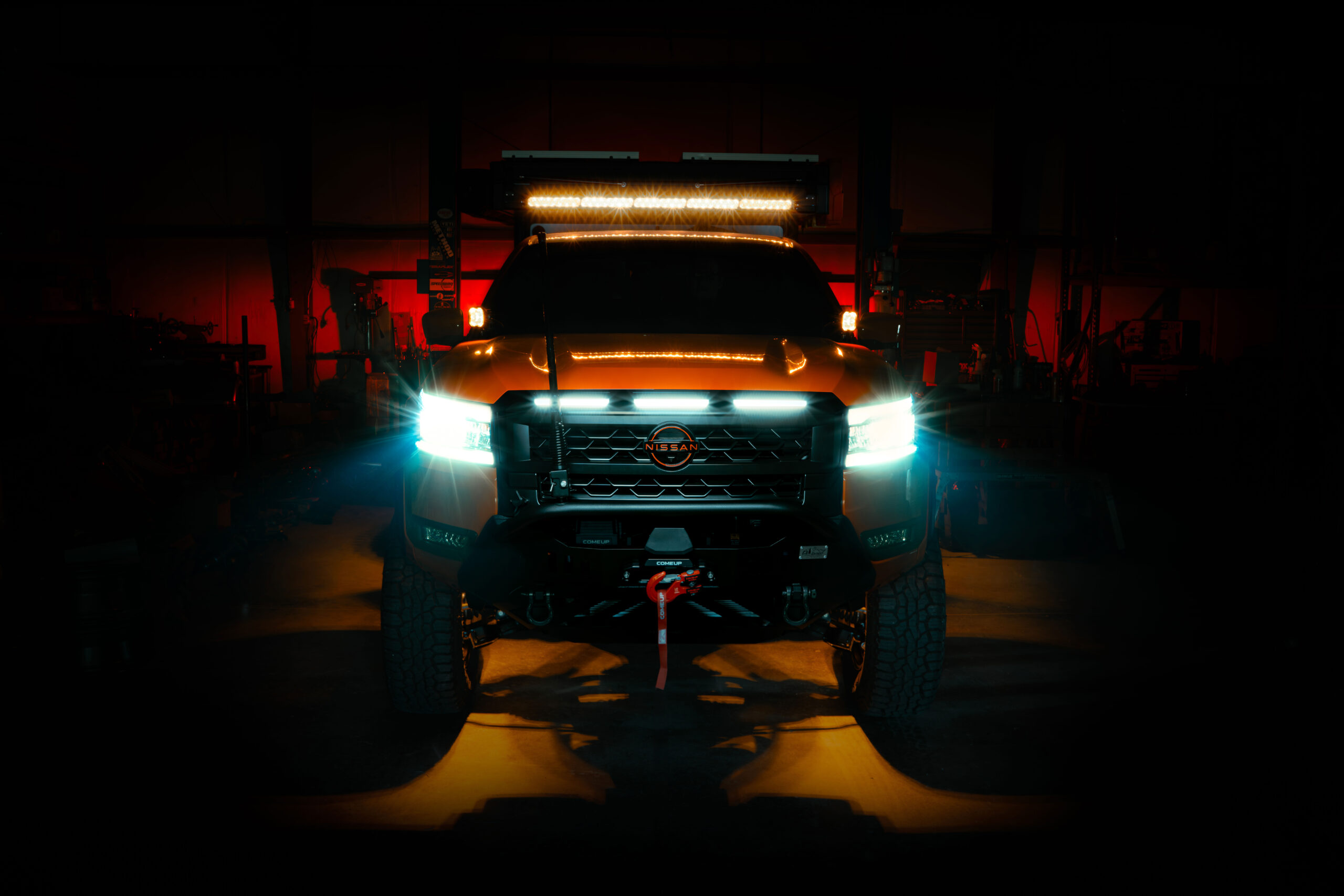
On a recent night drive, an oncoming vehicle’s intense white headlights left me momentarily dazzled. The color alone could not tell me whether those lights were factory equipment or an aftermarket conversion. But the encounter brought up a concern worth discussing among Filipino motorists: when we upgrade our headlights, are we checking what they do to everyone else’s visibility?
As a car guy, I understand wanting better lights. On an unfamiliar provincial road or a poorly illuminated stretch of highway, useful lighting is something you appreciate immediately. What I cannot get behind is treating the brightest-looking bulb as the best upgrade, without checking where its light actually goes.
A headlight upgrade should help you see the road. It should not make the person approaching from the other direction struggle to see theirs.

“Plug-and-play” does not mean the beam is correct
For an older vehicle with halogen headlights, an LED replacement can look like a straightforward improvement. The bulb fits, the connector plugs in, and the light appears whiter and brighter. That may establish physical and electrical compatibility, but it does not establish that the headlamp will produce the right beam.

A headlamp is an optical system, not simply a container for a bulb. Its reflector, lens, and shielding work around a particular light source; changing that source can change how light is distributed. An SAE technical paper explains that headlights are designed around specific sources to provide useful illumination while controlling glare.
That is why two LED bulbs with the same socket designation can perform differently—and why one bulb can behave differently in different headlamps. A 2019 study tested aftermarket H11 LED replacements in three low-beam headlamp units and found that none of the tested combinations met every measured photometric requirement. Some areas received insufficient light while others exceeded the permitted intensity, illustrating why apparent brightness is not enough.

This does not mean every LED retrofit is unsuitable. Tested replacements exist for specific applications, but compatibility needs evidence beyond a seller saying that the bulb fits. OSRAM, for example, provides application and compatibility guidance—and explicitly recommends workshop headlight adjustment after installing its NIGHT BREAKER LED lamps. Its overseas approvals should not automatically be treated as Philippine authorization.
The takeaway is more precise than “all LED bulbs need to be pointed lower.” Have the installation, beam pattern, and aim checked, then adjusted where required. If the bulb produces an unsuitable distribution, simply lowering the whole beam may sacrifice useful distance without resolving the underlying problem.
Dark tint is not a reason to dazzle everyone else
There is another part of this conversation we should not avoid: dark tint. Privacy and protection from the Philippine sun are understandable priorities, but the glass you look through remains part of your nighttime visibility. New Zealand’s transport agency specifically warns that tinted windows can reduce vision, particularly at night or in bad weather.
If your windshield tint makes the road difficult to see, installing increasingly powerful headlights is not a sensible first response. The tint still reduces the light reaching your eyes, while other motorists receive the glare your headlights produce. You may be trying to solve a visibility problem inside your own vehicle by creating one outside it.
Ask about visible light transmission, or VLT, rather than choosing tint solely by how dark it looks from outside. Higher VLT means more visible light passes through the filmed glass, while heat rejection is a separate performance measure. Films can provide heat rejection without requiring the darkest shade, so compare the specifications and prioritize a clear nighttime view.

Upgrade responsibly—and check more than brightness
Factory LED headlights should not be confused with an arbitrary LED bulb installed in a halogen housing. The factory system’s light source and optics are developed together, with beam distribution and glare control among the design requirements. That integration matters more than whether the light looks white, yellow, expensive, or fashionable.
However, “factory LED” is not a promise that a headlight can never cause glare. The Insurance Institute for Highway Safety evaluates illumination and glare regardless of whether a system uses halogen, HID, or LED technology, and notes that every type has examples of poor performance. Correct aim and the condition of the complete system still matter.

Before buying replacements, have a competent workshop inspect the existing headlights. Clouded lenses, damaged components, incorrectly seated bulbs, or poor aim deserve attention before another lighting technology enters the picture. Ask the installer to verify the proposed bulb’s suitability for your exact headlamp and check the finished low-beam pattern and alignment using the appropriate equipment and manufacturer procedure.
Do not accept “we pointed them down” as the entire quality check. A projector lens is not an automatic guarantee of compatibility either, and an impressive photograph of light against a wall does not establish complete beam performance. If the proposed setup cannot provide useful visibility without excessive glare, reconsider the parts rather than expecting other road users to tolerate them.
Responsible modification includes being willing to correct—or reverse—an upgrade that does not work properly. It also includes using low beams when approaching or following other traffic. Being enthusiastic about your own car should make you more attentive to how it affects the people sharing the road.

Know what your headlight leveler actually does
Some vehicles already provide a useful tool for controlling beam height: a manual headlight-leveling dial. Its main purpose is to compensate for changes in vehicle loading. Passengers and luggage can lower the rear of the vehicle, raising the nose and directing the low beams higher than intended.
The numbered positions are therefore not simply settings for a bright street, a dark highway, or a mountain road. Hyundai’s owner guidance, for example, uses higher numbers to lower the beam as loading increases. Follow your own vehicle’s passenger-and-luggage settings, and make the adjustment safely before driving; do not assume another model’s dial positions apply to yours.
A darker road is not a reason to raise the low beams above their correct aim. Use high beams when appropriate and return to low beams when other traffic requires it. The dashboard leveler also does not replace the workshop adjustment that establishes the headlamps’ correct baseline aim.
Automatic leveling performs the compensation without the driver turning a dial. Some systems respond primarily to loading changes; dynamic versions can also react to body pitch during acceleration and braking. The technology has a long association with xenon/HID headlights, but it is not exclusive to them: Toyota Motor Philippines’ 2025 Hilux brochure, for example, lists LED headlights with automatic leveling on selected variants.

Neither a projector lens nor a flagship badge proves that automatic leveling is fitted. Likewise, an “AUTO” position on the lighting switch usually refers to switching the headlights on and off according to ambient light—not adjusting their vertical aim. Automatic high-beam assistance is another separate function, so check what your particular vehicle actually has.
Ultimately, the standard should be simple: better visibility for you, without unnecessarily compromising visibility for somebody else. I have nothing against a worthwhile headlight upgrade. But if the result helps you see while making your kasalubong struggle, the job is not finished.
About the Author

Kevin Peters
Kevin, or Kev, is the Founder & Editor of Road Spec PH, a passion project born from a lifelong love of cars and automotive culture.
Long before working in the Philippine automotive industry, Kevin was already the kid who collected toy cars, spent countless hours playing Gran Turismo, and proudly told anyone who would listen that he wanted to be a race car driver when he grew up. While that racing career never quite happened, the passion for cars never went away.
When he’s not writing for Road Spec PH, you’ll probably find him playing racing simulators, adding to his die-cast car collection, or spending time with his 2016 Mitsubishi Lancer EX.
