From Fuel Anxiety to Electric Curiosity: Why Hybrids and EVs Are Winning Over Filipino Buyers
After years of hesitation, Filipino buyers are starting to see electrified vehicles as practical choices shaped by rising fuel costs, stronger brand support, and a market finally ready for change.

Not too long ago, the idea of seeing more hybrids and electric vehicles on Philippine roads felt more like a future forecast than a present reality. For many Filipino car buyers, the traditional formula was simple: buy a gasoline or diesel vehicle, maintain it properly, and once the warranty ends, have it serviced outside the casa to save on labor and parts. It was practical, familiar, and for decades, it worked. But the market is changing.
Today, hybrids and EVs are no longer just display units at motor shows or niche vehicles reserved for early adopters. They are now part of real buying conversations. More Filipino buyers are asking about fuel savings, battery warranties, charging options, hybrid systems, and whether it still makes sense to buy a purely internal-combustion vehicle in a market where electrified choices are growing quickly.
The bigger question is no longer whether hybrids and EVs will arrive, because they’re already here. The real question is: why are Filipino car buyers finally starting to lean toward them?


From invisible to impossible to ignore
From my own perspective, the shift feels dramatic.
During my time with Mitsubishi from 2017 to 2023, the EV market in the Philippines was almost invisible from a mainstream consumer standpoint. Electrified vehicles existed, but they were not yet part of the everyday buyer conversation.
Mitsubishi had the Outlander PHEV, which in many ways was ahead of its time locally. It showed that the technology was already possible. But the market around it was not ready yet.
Charging infrastructure was limited. Buyer awareness was low. Most Filipinos were still deeply comfortable with gasoline and diesel vehicles. And for many customers, the idea of paying a premium for a plug-in hybrid did not make immediate practical sense.
At the same time, there was still a strong stigma around China-made vehicles. For a long period, many Filipino buyers associated Chinese cars with being cheap, unproven, or risky. That perception was difficult to break, especially in a market where Japanese brands built decades of trust through reliability, resale value, and strong aftersales support.
So even if electrified technology was already entering the conversation, the local market was not yet fully listening.
Back then, the Outlander PHEV felt more like a preview of what could happen someday rather than a product that would immediately reshape the market. That “someday” now feels much closer.
Hyundai showed that the technology had arrived
When I moved to Hyundai, the shift became more obvious.
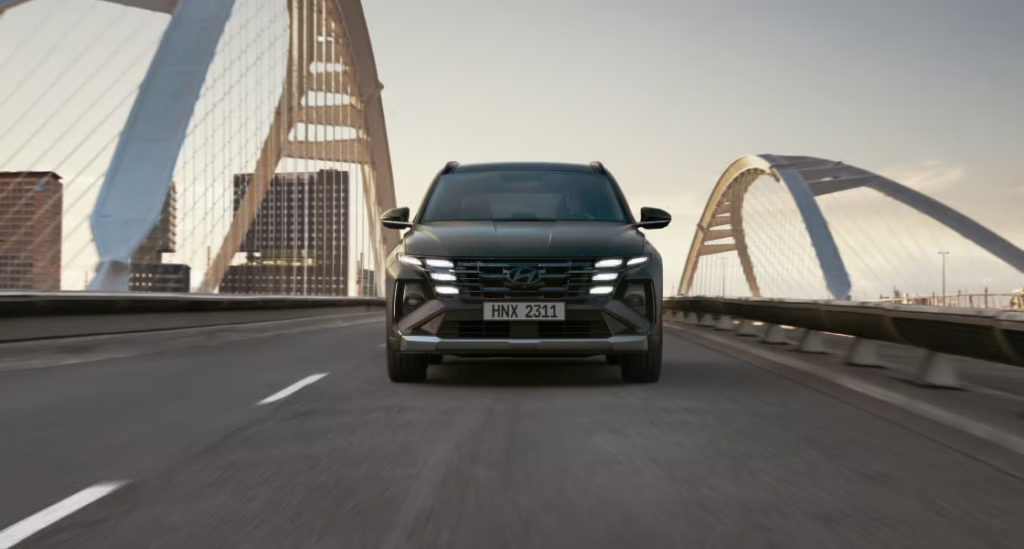
The arrival of models like the IONIQ 5 and IONIQ 6 showed that EVs were no longer awkward, experimental, or overly compromised. These were proper modern vehicles with strong design, advanced platforms, impressive technology, and a different kind of driving experience.
Hyundai’s electrified lineup also helped show that the transition would not be purely electric right away. Hybrid models such as the Tucson Hybrid and Santa Fe Hybrid made the technology feel more familiar to buyers who were not yet ready to fully depend on charging infrastructure and that matters most, specially for Filipino car buyers.
A full EV asks buyers to change more than just the vehicle, it asks them to think about:
- Where they park,
- Where they charge,
- How far they drive,
- Whether they can install a home charger, and
- How comfortable they are with public charging availability
A hybrid, on the other hand, feels like a safer first step.
You still fuel it like a normal vehicle. You still drive it like a normal vehicle. But you get better efficiency, smoother low-speed driving, and a taste of electrified motoring without needing to plan your life around a charger.
That is why hybrids may end up being the real bridge technology for many Filipino buyers.
Fuel prices changed the conversation
For years, Filipino buyers would talk about fuel economy, but many still prioritized price, brand reputation, resale value, and familiarity. A fuel-efficient engine was nice to have, but it was not always enough to make buyers shift to a new type of powertrain.
Then fuel prices became harder to ignore.

When gasoline and diesel prices rise, the cost of ownership becomes more visible. Suddenly, the monthly fuel bill matters more. Daily commutes feel more expensive. Long drives require more planning. Even buyers who once dismissed hybrids start asking if the higher purchase price can be justified by lower running costs and this is where hybrids found their opening.
A hybrid does not need to convince a buyer to fully abandon the gas station. It only needs to show that a vehicle can consume less fuel while still fitting into the lifestyle they already know.
For a market like the Philippines, that is a powerful argument. It gives buyers a sense of progress without requiring a complete leap of faith.

The BYD effect
One of the biggest reasons the local electrified market feels different today is the aggressive rise of BYD.
BYD did not enter the conversation quietly. It pushed into the market with strong pricing, a growing lineup, visible marketing, and products that made people rethink what a Chinese electrified vehicle could be.
That matters because BYD did more than sell cars. It helped change perception.
A few years ago, many Filipino buyers were hesitant about China-made vehicles. Today, people are actively considering BYD models, asking about DM-i technology, comparing them against Japanese and Korean rivals, and treating them as serious options and that shift is huge.
BYD’s momentum also indirectly helped other Chinese and Asian brands gain attention. When one brand successfully changes the conversation, it creates more space for others. Suddenly, buyers become more open to considering GAC, BAIC, Omoda & Jaecoo, Geely, MG, Chery, and even VinFast from Vietnam.
Not all of these brands will win equally. Some will need to prove their long-term reliability, parts availability, resale value, and service experience. But the door has already been opened.
For Filipino buyers who want more choices, that is good news.
More competition means better pricing pressure, more features, better warranty coverage, stronger dealer support, and faster technology adoption.
The Japanese brands still have a major advantage
Even with the rise of Chinese electrified vehicles, the Japanese brands still hold a powerful advantage in the Philippines: trust.
Toyota, in particular, has made hybrid technology feel approachable. Its hybrid models do not require plugging in, which removes one of the biggest psychological barriers for Filipino buyers. You get electrified driving without needing to think about charging stations and that simplicity matters.
Toyota’s hybrid strategy fits the Philippine market well because it does not force the buyer to jump straight into full EV ownership. It presents electrification as an upgrade to the familiar ownership experience rather than a complete lifestyle change.
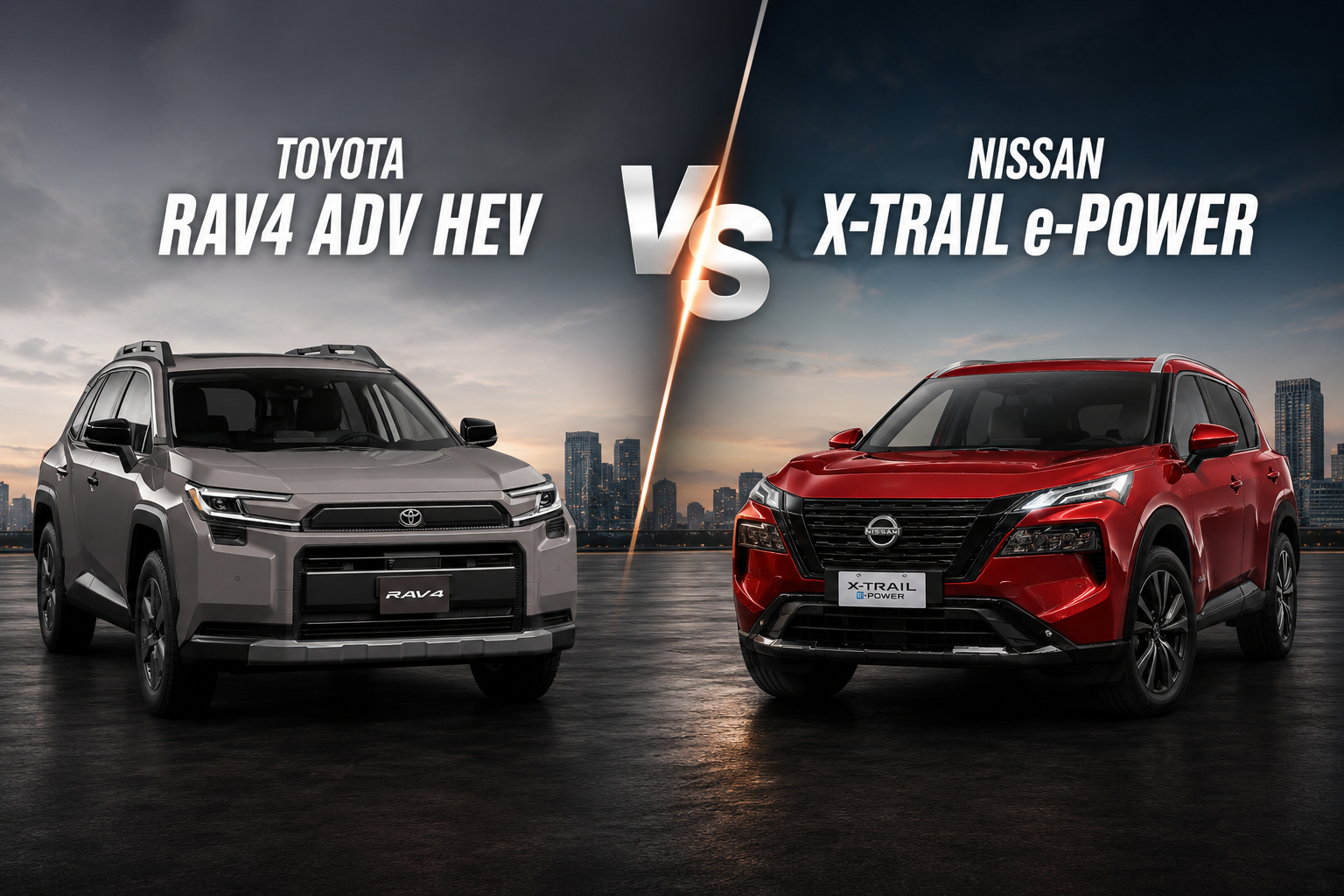
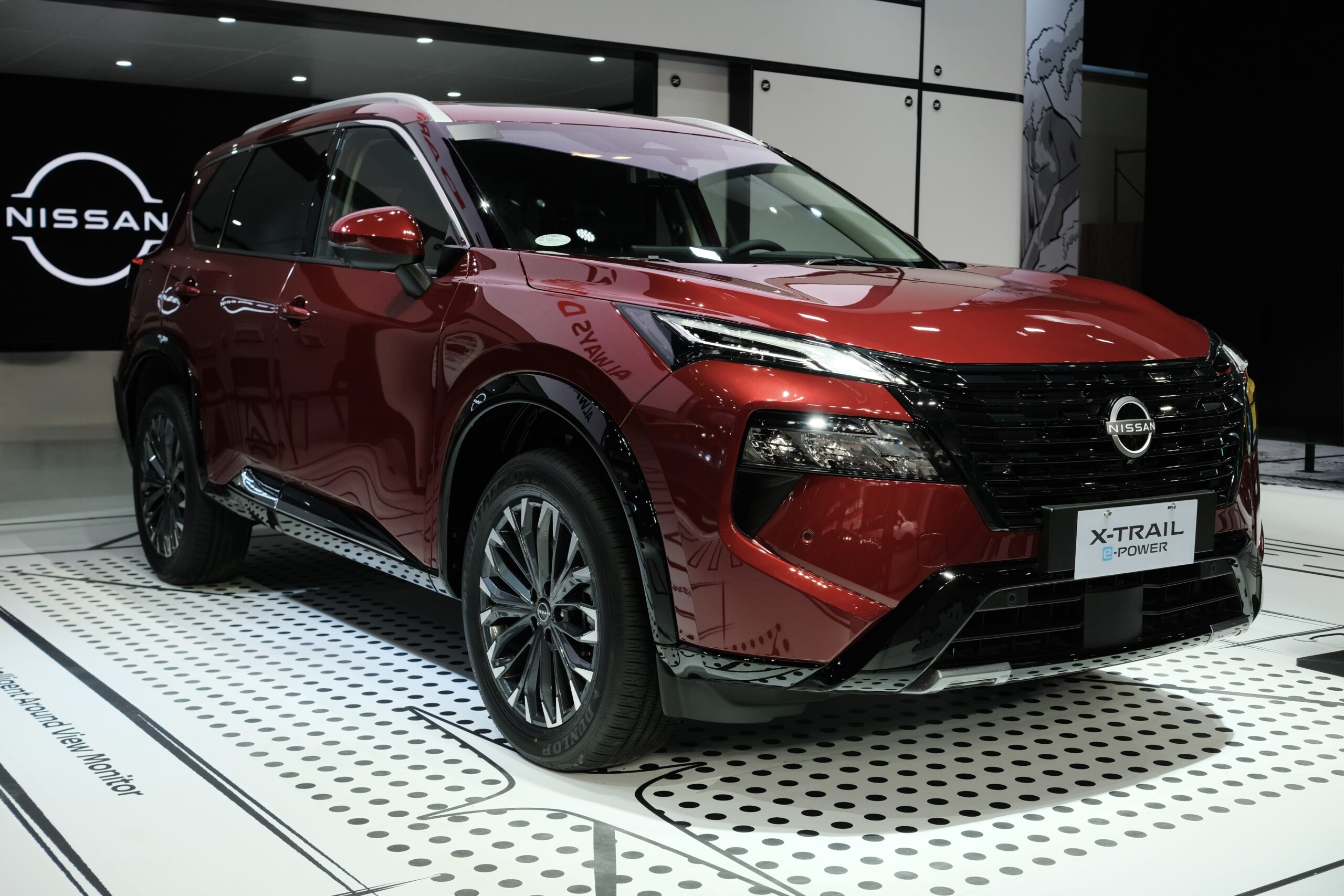
Nissan also has a unique opportunity with e-POWER. The idea of an electric-driven vehicle with a gasoline engine acting as a generator is interesting because it gives drivers the feel of electric propulsion without the charging dependency of a full EV.
That is one reason the new Nissan X-Trail e-POWER is personally interesting to me. As someone who still enjoys driving a manual gasoline car, I can understand the appeal of a traditional ICE vehicle. But I can also see why a smooth, efficient electrified SUV would be tempting for daily use.
The hybrid route simply makes sense for where the Philippine market is right now.
CAMPI-TMA’s Top 10 brands (as of April 2026)are as follows:
Brand
Sales volume
1
Toyota
66,206
2
Mitsubishi
24,371
3
Suzuki
6,289
4
Nissan
5,323
5
Ford
4,877
BYD sits between Mitsubishi Motors Philippines (MMPC) which sold 24,371 vehicles, and Suzuki Philippines (SPH),which delivered 6,289 units to customers.

Aftersales support may become the real battleground
There is one part of the hybrid and EV conversation that I think deserves more attention: aftersales.
For decades, many Filipino owners followed the same ownership pattern. Keep the car serviced at the casa during the warranty period, then move to trusted third-party shops once the warranty ends. This is especially common because outside labor is usually cheaper, parts can be sourced more flexibly, and independent mechanics are familiar with traditional gasoline and diesel vehicles.
That formula is one of the reasons ICE ownership feels so practical in the Philippines. But hybrids and EVs may change that.
With electrified vehicles, the technology is more specialized. High-voltage batteries, electric motors, inverters, control modules, regenerative braking systems, and proprietary software are not things every neighborhood repair shop can immediately handle.
This creates a very different aftersales landscape.
For brands selling hybrids and EVs, this could be a major advantage. Buyers may be more likely to return to authorized dealerships for service, especially if they are concerned about battery systems, warranty coverage, diagnostics, software updates, and genuine parts availability.
In other words, electrification could increase casa retention.

From a business perspective, that is a major win for brands and dealers. From a customer perspective, it creates both reassurance and concern.
The reassurance is that trained technicians, specialized tools, and official parts should give owners more confidence. The concern is that buyers may feel locked into casa servicing longer than they would with a traditional ICE vehicle and this is where brands need to be careful.
If they want Filipinos to fully trust hybrids and EVs, they need to make aftersales support transparent, accessible, and reasonably priced. Battery warranties help, but they are only one part of the equation. Customers also need to know what regular maintenance costs look like, how long parts take to arrive, how many dealerships can service electrified vehicles, and what happens once the vehicle is out of warranty.
The technology may sell the car, but aftersales will determine long-term trust.
ICE vehicles are not going away overnight
Even with the rise of hybrids and EVs, it would be unrealistic to say that ICE vehicles are suddenly becoming irrelevant. They are not.
For many Filipino buyers, gasoline and diesel vehicles still make sense. They are familiar, easy to maintain, widely supported, and often cheaper to repair outside the casa. Parts availability is strong, mechanics are everywhere, and ownership habits are already well established and I understand that personally.
I own a 2016 Mitsubishi Lancer EX with a manual transmission. It is simple, reliable, relatively affordable to maintain, and still enjoyable to drive. There is something satisfying about a traditional gasoline car, especially one with a manual gearbox. It feels mechanical, direct, and familiar in a way many modern electrified vehicles do not. For enthusiasts, ICE vehicles still have emotional value.
The sound, the shifting, the maintenance culture, the tuning potential, and the connection to older automotive traditions are not things that disappear just because newer technology becomes available.
In the future, ICE vehicles may become less of the default choice for practical daily driving, but they may remain important as enthusiast cars, budget alternatives, or long-term ownership choices for people who value simplicity and lower repair costs.

The likely path: ICE to hybrid, then EV
The Philippine market probably will not jump from ICE to full EV overnight and many buyers will likely move from traditional ICE vehicles to hybrids first. Hybrids are easier to understand, easier to live with, and less dependent on charging infrastructure. They offer a practical middle ground between old and new.
From there, more buyers may eventually consider plug-in hybrids and full EVs once charging becomes more common, prices become more competitive, battery confidence improves, and more service centers become capable of supporting the technology.
Urban buyers with home parking and predictable driving routes may adopt EVs sooner. Provincial buyers, condo residents, renters, and long-distance drivers may prefer hybrids longer. Enthusiasts may continue to keep ICE vehicles for weekend use, project builds, or simply because they enjoy the driving experience and that is not a bad thing.
A healthy market does not need one technology to immediately replace everything else. What Filipino buyers need is choice.
More choices mean a better market
The arrival of more hybrids and EVs is good for the Philippine market because it forces everyone to improve.
Japanese brands can no longer rely only on long-standing trust. Korean brands can continue pushing design and technology. Chinese brands can challenge the market with pricing, features, and rapid product rollout. New players like VinFast can test whether Filipino buyers are ready to look beyond the usual automotive countries. This competition benefits customers and it can lead to better value, better features, more efficient vehicles, improved warranties, stronger aftersales programs, and faster infrastructure development.
For years, Filipino buyers had to choose mainly between what was familiar and what was affordable. Now, the market is slowly adding a third option: what is more efficient and future-ready.
That does not mean everyone should buy an EV tomorrow and it also does not mean ICE vehicles are suddenly bad choices. But it does mean the old assumptions are changing.
A few years ago, many Filipino buyers were lukewarm toward hybrids, skeptical of EVs, and hesitant about Chinese brands. Today, those same buyers are comparing fuel savings, reading about battery warranties, watching BYD reviews, checking Toyota hybrid prices, looking at Nissan e-POWER, and asking whether their next car should still be purely gasoline-powered. That is a major shift and it may only be the beginning.

Final Thoughts
The Philippine car market is entering a more interesting phase.
ICE vehicles still make sense, especially for buyers who value simplicity, affordability, and easier third-party maintenance. Hybrids are becoming the practical bridge for those who want better fuel efficiency without changing their ownership habits too much. EVs are becoming more convincing as prices, infrastructure, and brand support improve.
Personally, I still appreciate the honesty and simplicity of my Lancer EX. It is reliable, affordable to maintain, and connected to the kind of driving experience many enthusiasts still love. But I also understand why hybrids are becoming harder to ignore.

If I were to consider an electrified vehicle today, something like the new Nissan X-Trail e-POWER would definitely be on my radar. It represents the kind of transition that feels realistic for many Filipino buyers: electric-driven, efficient, but still practical for a market that is not fully ready to depend on charging alone.
The future of Philippine motoring may not be purely electric just yet but it is clearly becoming more electrified. And for Filipino buyers, that could mean better choices, stronger competition, and a market that finally moves beyond the old question of gasoline versus diesel.
Now, the bigger question is becoming: How electrified do you want your next car to be?
About the Author

Kevin Peters
Kevin, or Kev, is the Founder & Editor of Road Spec PH, a passion project born from a lifelong love of cars and automotive culture.
Long before working in the Philippine automotive industry, Kevin was already the kid who collected toy cars, spent countless hours playing Gran Turismo, and proudly told anyone who would listen that he wanted to be a race car driver when he grew up. While that racing career never quite happened, the passion for cars never went away.
When he’s not writing for Road Spec PH, you’ll probably find him playing racing simulators, adding to his die-cast car collection, or spending time with his 2016 Mitsubishi Lancer EX.