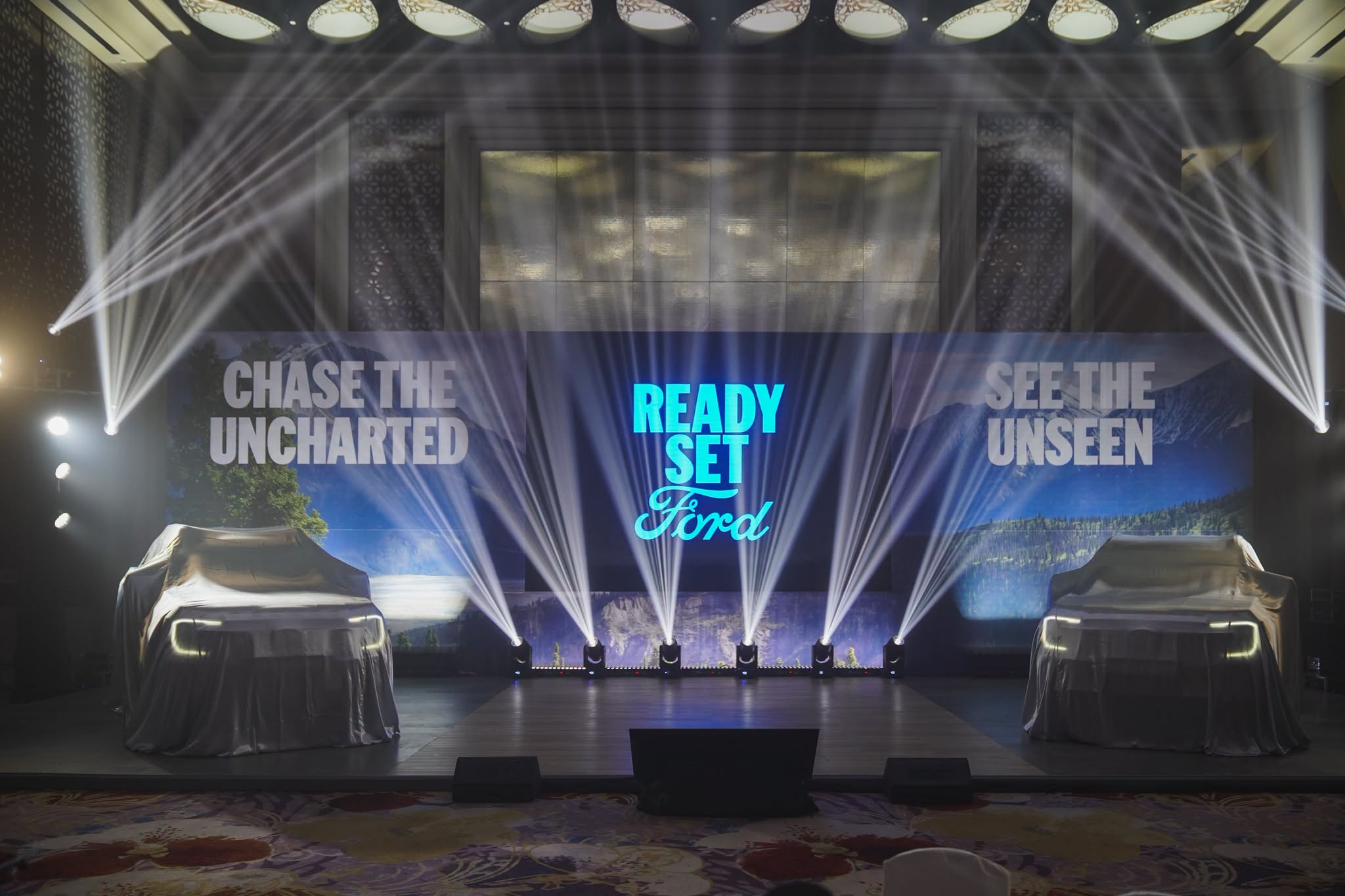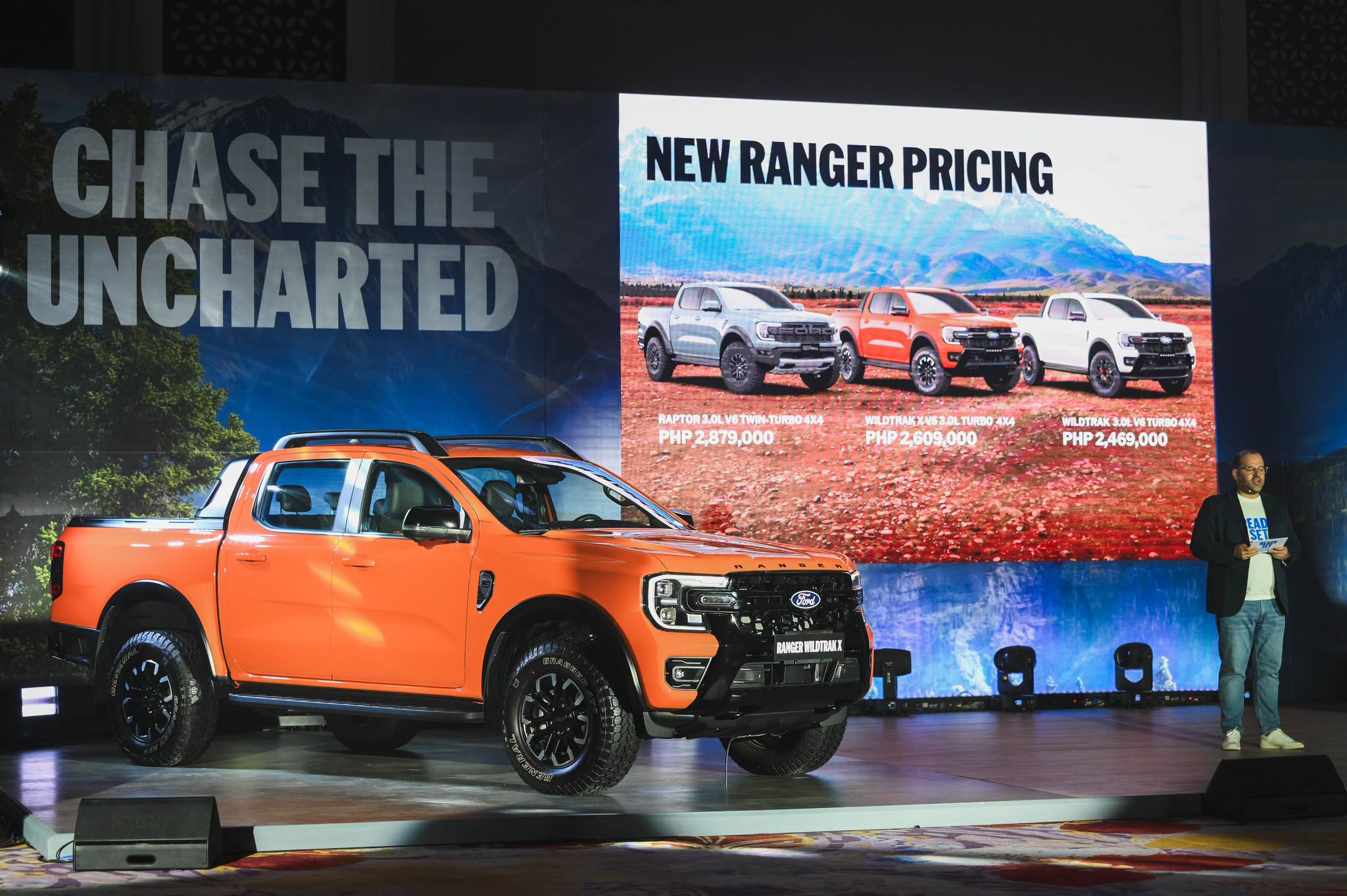
Ford Philippines has given the Ranger and Everest something enthusiasts can appreciate: a 3.0-liter turbo-diesel V6 producing 250 PS and 600 Nm, paired with a 10-speed automatic. Available in the Ranger Wildtrak, Wildtrak X, and Everest Platinum, it gives buyers a more powerful alternative to the familiar four-cylinder diesel formula. But its arrival also raises a reasonable question: why emphasize a bigger diesel engine when electrification is becoming an increasingly important part of the Philippine buying conversation?
The timing makes that question more relevant. Following the previous week’s rollback, the Department of Energy announced another round of fuel-price increases effective September 8, including a ₱5.18-per-liter diesel adjustment. It is a reminder that being able to afford a premium pickup or SUV does not make its running costs irrelevant.
Still, declaring the V6 a mistake simply because hybrids exist would be too easy. The more useful assessment is whether Ford is serving a genuine need—and whether it should also offer an electrified answer to buyers whose priorities have changed.

The V6 is not Ford’s entire electrification strategy
Ford already sells the Territory Hybrid and Mustang Mach-E in the Philippines. More importantly, hybrids are contributing meaningful volume: January–July 2026 CAMPI–TMA figures show 3,093 Ford HEVs against 8,587 total Ford vehicles, or approximately 36 percent of its reported sales. That is hardly a token electrification effort.

However, the Territory cannot answer every Ranger or Everest buyer’s requirements. Someone who needs a pickup bed is not necessarily shopping for a crossover, while an Everest buyer may specifically want a seven-seat, four-wheel-drive SUV. An electrified model elsewhere in the showroom does not automatically replace an electrified version of the vehicle they actually need.

Our reading is that Ford is serving different buyers rather than choosing one powertrain for everybody. A diesel remains a straightforward proposition for owners who prioritize their existing refueling routine and want substantial pulling power for demanding use. Ford’s wider international Ranger update also expanded V6 availability, so the Philippine move follows a broader product direction rather than an isolated local decision.

Ford already has a Ranger PHEV—so where is ours?
The answer to whether Ford can build a hybrid pickup is an unequivocal yes. The Ranger PHEV was already available overseas in 2025, combining a 2.3-liter EcoBoost gasoline engine with an electric motor for 281 PS and 697 Nm. Its 11.8-kWh usable battery supports up to 43 km of electric-only driving under WLTP testing, while Ford quotes towing capability of up to 3,500 kg when properly equipped. These are overseas specifications, not a Philippine-market announcement.

Ford also offers hybrid versions of the Maverick and F-150 in the United States. Electrified pickups are therefore existing products within the company, not merely concepts or distant plans. Their presence abroad does not, however, establish Philippine availability.
There has been a local indication of interest. In August 2025, Top Gear Philippines reported Ford Philippines executive Ryan Lorenzo saying the Ranger PHEV would arrive “at the right time.” That statement did not provide a firm launch date, and we have not found a confirmed Philippine timetable in the material reviewed for this article.

Meanwhile, Nissan’s planned November arrival of the Navara Pro PHEV makes the question more pressing. Its announcement is not proof of sales success, but it gives interested pickup buyers another reason to consider waiting. Ford’s challenge is no longer explaining whether an electrified Ranger is possible; it is explaining when Filipino customers will have that choice.
Does the V6 pricing stand up to the alternatives?
Against established Japanese competitors, Ford’s pricing is more competitive than the bigger engine might suggest. The following comparison uses current advertised Philippine prices and manufacturer-rated outputs, rather than promotional discounts or overseas specifications.
| Model | Advertised price | Diesel engine | Output | Automatic transmission |
|---|---|---|---|---|
| Ford Ranger Wildtrak 4×4 | ₱2,469,000 | 3.0L V6 | 250 PS / 600 Nm | 10-speed |
| Ford Ranger Wildtrak X 4×4 | ₱2,609,000 | 3.0L V6 | 250 PS / 600 Nm | 10-speed |
| Toyota Hilux Conquest 4×4 AT | ₱2,611,000 | 2.8L four-cylinder | 204 PS / 500 Nm | 6-speed |
| Mitsubishi Triton Athlete 4WD AT | ₱2,359,000 | 2.4L four-cylinder | 204 PS / 470 Nm | 6-speed |
| Ford Everest Platinum 4×4 | ₱2,849,000 | 3.0L V6 | 250 PS / 600 Nm | 10-speed |
| Toyota Fortuner GR-S 4×4 | ₱2,650,000 | 2.8L four-cylinder | 224 PS / 550 Nm | 6-speed |
Prices checked September 9, 2026. Paint, accessories, location charges, and offers may affect the final quotation. Higher output and more gears do not automatically establish better economy, durability, or overall performance.
The Wildtrak X is ₱2,000 cheaper than the new Toyota Hilux Conquest 4×4 AT, while offering higher engine output and Bilstein suspension hardware. The regular Wildtrak costs ₱110,000 more than the Mitsubishi Triton Athlete, adding 46 PS and 130 Nm on paper. Ford is therefore not simply demanding a large premium for two additional cylinders, although the less expensive Triton remains a rational choice for someone who does not need that extra output.

The Everest Platinum’s ₱199,000 premium over the Toyota Fortuner GR-S needs a broader assessment. Its proposition includes ventilated power front seats, matrix LED lighting, a 12-speaker Bang & Olufsen system, and a powered folding third row alongside the engine upgrade. Whether that package is worth paying for depends on how much those features matter to the buyer—not merely the V6 badge.
Chinese-brand alternatives make the comparison less comfortable for Ford. The BYD Shark 6 DMO Advanced is advertised at ₱2,388,000—₱81,000 below the regular Wildtrak—with a plug-in hybrid drivetrain, a 29.6-kWh battery, and quoted combined motor output of 435 PS and 650 Nm. BYD claims up to 100 km of electric range under NEDC testing; that figure is neither a Philippine road-test result nor directly comparable with the Ranger PHEV’s WLTP figure.

That does not make the Shark the automatic winner. Its combined motor ratings cannot settle questions about loaded performance, towing suitability, suspension behavior, or long-term ownership costs. But it does challenge the idea that buyers must spend more upfront to obtain an electrified pickup.
The SUV comparison also extends beyond electrification. GWM Philippines lists the seven-seat, four-wheel-drive Haval H9 at ₱1,998,888, with a 2.4-liter diesel producing 186 PS and 480 Nm. It is not an equivalent specification package, but its roughly ₱850,000 price advantage over the Everest Platinum forces buyers to identify what they genuinely value in the Ford.

Nor is the electrified pickup challenge exclusively Chinese: Toyota Philippines now lists a Hilux BEV 4×4 at ₱2,990,000. Different powertrains are becoming part of the comparison within familiar brands as well.

Running costs remain the unresolved part of this assessment. We do not yet have a comparable Philippine fuel-consumption test proving how the new V6 performs against these alternatives under the same conditions. Engine displacement alone cannot supply that answer, while a fair PHEV calculation must include both gasoline and electricity, charging frequency, and the distance driven after its usable electric range is exhausted.
For an owner who regularly uses the Ford’s capabilities, its price can be defensible. For someone primarily commuting through traffic with convenient charging available, an electrified alternative deserves serious consideration. “They can afford the fuel” is not a value argument; the additional expense should buy something the owner actually wants or needs.

Brand loyalty matters—but it cannot do all the work
Ford and Mitsubishi both have recognizable nameplates and established followings, but their Philippine market positions are not equivalent. January–July 2026 CAMPI–TMA figures put Mitsubishi at 42,592 vehicles, or 17.62 percent of member-company sales, against Ford’s 8,587 units, or approximately 3.55 percent. These are shares within the association’s reporting group, not the entire Philippine market.
Sales establish demand, not the precise reasons behind every purchase. Nevertheless, brand familiarity can carry practical and emotional value: an owner may trust a dealership they already use, appreciate how a previous vehicle served the family, or simply prefer the character of a particular pickup or SUV. A new powertrain does not automatically erase those considerations.

Mitsubishi Motors Philippines began selling the current-generation Outlander PHEV on August 21, adding to a nameplate with years of global plug-in hybrid experience. The distinction is how broadly electrification reaches the local lineup—not whether the engineering exists.
That leaves Ford with a defensible present-day product and an increasingly important next question. The V6 Ranger and Everest can appeal to buyers who value their performance, equipment, and familiar ownership proposition. But loyalty should encourage Ford to give those same customers more choices, including an electrified pickup, rather than assume they will never look elsewhere.

The V6 deserves to be judged on what it delivers. The Ranger PHEV deserves a clearer Philippine answer. A loyal Ford buyer should not have to stop being one simply because their priorities have changed.