Hyundai Motor Philippines Inc. (HMPH), in partnership with Good Neighbors International Philippines, is bringing back its “Service with a Heart” aftersales program for a second consecutive year.
Running from August 15 to September 30, 2026, the program will provide a ₱150 donation for every Periodic Maintenance Service (PMS) and oil change service availed at authorized Hyundai Service Centers during the campaign period. The proceeds will support the rebuilding of a school library and reading area at Maasin Community Elementary School in San Clemente, Tarlac.
The school is identified by HMPH as serving a diverse learner population that includes members of the Aeta community, with the project aimed at supporting a more inclusive and equitable learning environment.
The school itself is listed in the Department of Education’s National Inventory Dashboard under the Tarlac division, confirming its existence and school ID. The school has also appeared in local reporting, including coverage of pupils participating in the 2024 Belenismo sa Tarlac.
More Than Just a Service Visit
Customers participating in this year’s program will also receive a complimentary Brake Cleaning Service worth ₱1,000, along with exclusive discounts on PMS packages. Customers who donate school supplies, bags and/or rain gear through donation boxes at participating Hyundai dealerships will also receive a special token from Hyundai.
The 2026 campaign builds on Hyundai’s first “Service with a Heart” program, which ran from August to September 2025 in partnership with Good Neighbors Philippines.
During the first campaign, HMPH pledged ₱150 for every out-of-warranty Hyundai vehicle serviced at its authorized dealerships, while customers were also encouraged to contribute hygiene kits. The program ultimately generated ₱386,700 in monetary donations and 849 hygiene kits, which were turned over to Good Neighbors Philippines for distribution to families and children in San Isidro, Rizal.
The 2025 effort was followed by a ceremonial turnover in October, with HMPH and Good Neighbors Philippines distributing the donated hygiene kits to communities in San Isidro.
For this year’s campaign, HMPH is shifting the focus from community health and hygiene to education, specifically the rebuilding of a library and reading area in Tarlac.
“At Hyundai Motor Philippines, our global vision, ‘Progress for Humanity’ guides everything we do,” said HMPH Managing Director Cecil Capacete. “We want them to see that when you own a Hyundai, you can make a positive impact not just on your life, but also on the lives of those around you.”
With the program running until September 30, Hyundai owners have another opportunity to combine a routine service visit with a contribution to a community project. The campaign also continues HMPH’s partnership with Good Neighbors Philippines, an organization that has worked on community development, education, health and other programs in the Philippines for years.
For Hyundai owners, a regular trip to the service center this time can mean more than simply keeping their vehicle maintained.
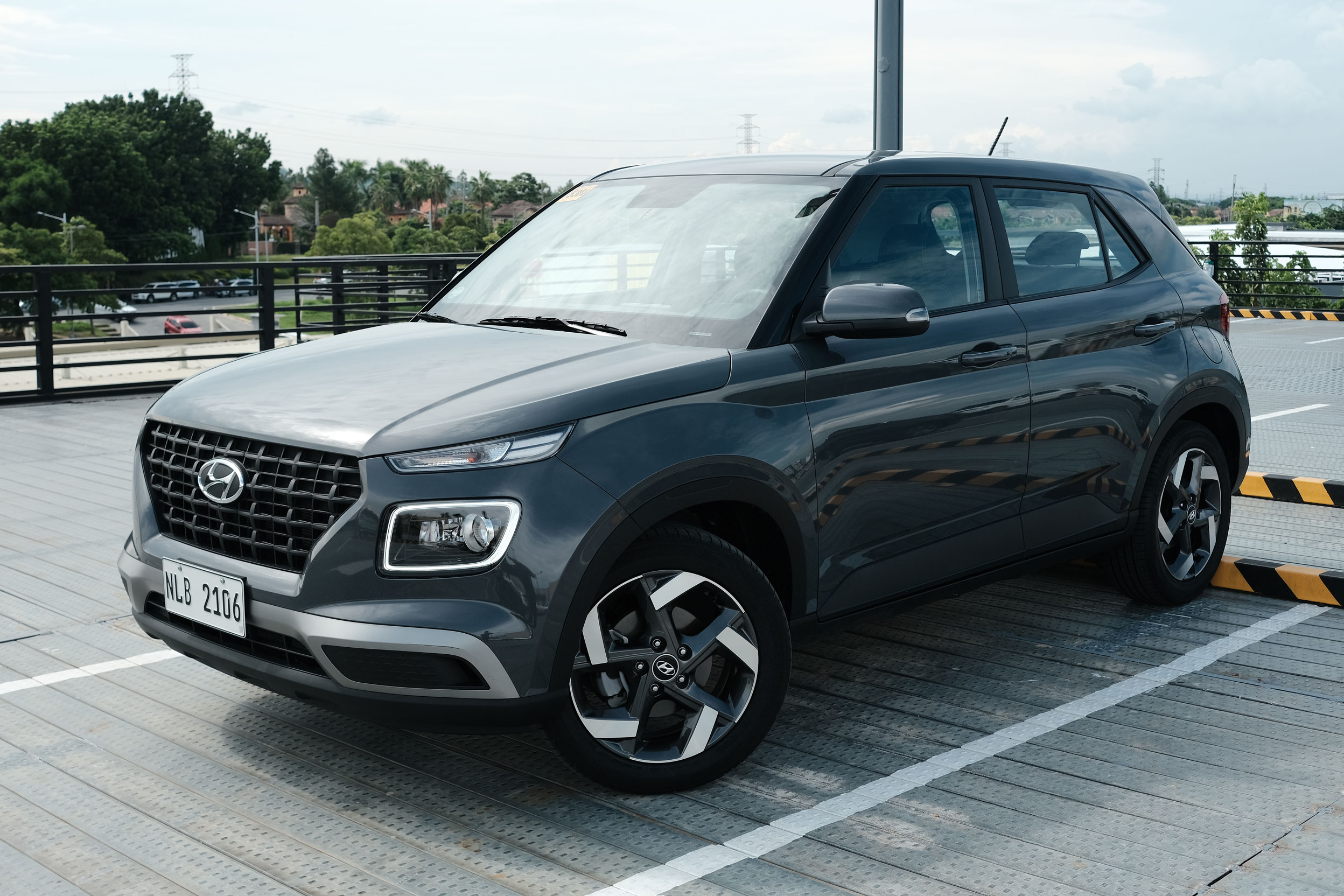
The Hyundai Venue isn’t trying to reinvent the subcompact crossover formula, and we think that’s exactly why it works.
There are cars that try to impress you with massive touchscreens, countless drive modes, and an endless list of technology features. Then there’s the Hyundai Venue GLS, a subcompact crossover that takes a much simpler approach.
After spending time behind the wheel during our weekend drive around Laguna and bringing it on our daily office commute, we quickly realized that the Venue’s biggest strength isn’t any single feature—it’s how everything simply works together.
For buyers looking for an affordable crossover that prioritizes ease of use over unnecessary complexity, the Venue might just be one of Hyundai’s most underrated offerings today.
Exterior Design
The Venue’s front fascia strikes a good balance between practicality and modern styling without resorting to overly aggressive design cues seen on some of today’s compact crossovers. Its distinctive lighting arrangement places the main headlamps midway down the front bumper, while the turn signal lamps sit higher up near the hood line. Dominating the nose is a large black grille finished with a chrome Hyundai emblem, giving the Venue a clean and purposeful appearance.
Rear Design
At the rear, the Venue continues its practical and understated design language. The taillights feature a clean, uncomplicated layout, complemented by neatly placed Hyundai and Venue badging on the tailgate. What stood out to us, however, was how the squared-off body lines carry through to the rear, giving the crossover a more planted and substantial presence than its compact dimensions suggest. Rather than looking like a small city car, the Venue projects the confidence of a proper crossover, making it feel right at home alongside larger vehicles on the road.
Body Design and Road Presence
Viewed from the side, the Hyundai Venue carries a clean and purposeful profile highlighted by sharp character lines and its signature boxy proportions. Its modest ground clearance and comfortable ride height strike a practical balance for everyday driving, making ingress and egress easy while still providing the elevated seating position that many crossover buyers appreciate. Although the design remains understated, the strong body lines running from front to rear give the Venue a solid and well-planted stance, allowing it to project the presence of a genuine crossover despite its compact footprint.
Interior Design
Cabin Layout
One thing we appreciated almost immediately was the straightforward interior.
Unlike many newer vehicles that move almost every function into the touchscreen, the Venue still keeps physical buttons for climate controls and frequently used functions. It makes everyday driving easier because you spend less time looking for controls and more time focusing on the road.
Material quality is what you’d expect for the price point, but everything feels well assembled. More importantly, the cabin feels airy thanks to its upright design and generous glass area.
Steering Wheel and Instrument Cluster
Behind the wheel, the Venue immediately feels well sorted for everyday driving. The steering has a reassuring heft to it—light enough to make parking and low-speed maneuvers effortless, yet weighted sufficiently to inspire confidence at highway speeds. Hyundai also got the steering wheel size just right. It feels natural in the hands, striking a balance between comfort and control without being overly large or too compact.
The multifunction steering wheel keeps things straightforward, offering controls for the audio system and the digital instrument cluster. While the Venue GLS does without cruise control, its absence isn’t particularly surprising given the vehicle’s positioning in the more affordable end of the crossover segment. Instead, Hyundai focuses on providing the essentials that most drivers will use on a daily basis.
Practicality
One of the Venue’s strongest practicality features is its infotainment system. Hyundai equips the Venue GLS with wireless Apple CarPlay and Android Auto, eliminating the need to plug in your phone every time you get behind the wheel. While wireless smartphone connectivity is becoming more common, it’s still not something you’ll find across every crossover in this price range, making it a welcome convenience for daily driving. During our time with the vehicle, it quickly became one of those features we appreciated the most.
The touchscreen itself isn’t the largest in its segment, but Hyundai makes up for it with a thoughtful layout. Instead of relying entirely on touch inputs, the system retains dedicated physical buttons positioned below the display for commonly used functions. It’s a practical decision that makes the infotainment system easier to operate while on the move, especially for drivers who prefer tactile controls or aren’t as comfortable navigating touchscreens. Sometimes, keeping the essentials simple is the better approach.
Engine & Performance
Under the hood, the Hyundai Venue takes a slightly different approach compared to many of its rivals. Instead of adopting the increasingly common 1.5-liter engine found in several competitors—and even in some of Hyundai’s own models such as the Creta—the Venue is powered by a larger 1.6-liter Smartstream naturally aspirated gasoline engine.
At first glance, the decision may seem unusual for a crossover of this size. However, Hyundai’s choice reflects a different engineering philosophy. Rather than focusing solely on downsizing, the company opted for a well-proven naturally aspirated powertrain that emphasizes smooth, predictable performance, long-term reliability, and simpler maintenance. The additional displacement also helps provide stronger low- and mid-range response, making the Venue feel more relaxed in everyday city driving where frequent acceleration from a standstill is common.
Transmission
Power is sent to the front wheels through Hyundai’s Intelligent Variable Transmission (IVT), a transmission designed to deliver smoother acceleration while minimizing the rubber-band effect commonly associated with traditional CVTs. During our time with the Venue, the powertrain proved to be well suited for daily commuting. Acceleration felt linear and easy to modulate, while the transmission remained unobtrusive during normal driving conditions.
While a larger-displacement engine may not deliver the same fuel economy figures as some smaller alternatives on paper, the trade-off is a powertrain that feels refined, straightforward, and confidence-inspiring. It may not be the fastest crossover in its class, but for drivers looking for predictable performance and hassle-free everyday usability, the Venue’s combination of the 1.6-liter engine and IVT transmission makes a compelling case.
Cargo Space
One area where the Hyundai Venue genuinely surprised us was its cargo capacity. Despite being one of the smaller crossovers in Hyundai’s lineup, the rear cargo area is more accommodating than its compact footprint suggests. With the rear seats in place, the Venue offers approximately 355 liters of luggage space—more than enough for a few carry-on suitcases, grocery runs, or a weekend’s worth of luggage.
Need to haul larger items? The Venue’s 60:40 split-folding rear seats make it easy to expand the cargo area when needed, increasing practicality for bulkier loads such as bicycles, camping equipment, or even furniture from a quick trip to the home improvement store. With the rear seats folded flat, cargo capacity grows to around 903 liters, giving the Venue a level of versatility that many buyers will appreciate.
Driving Experience
We spent the weekend using the Hyundai Venue the way many owners would—as a daily commuter. Our route took us from Santa Rosa, Laguna to Bonifacio Global City (BGC) in Taguig, covering everything from provincial roads and city traffic to expressway cruising. It proved to be an excellent opportunity to see how the Venue performs in real-world driving conditions rather than in a controlled test environment.
Around town, the Venue immediately impressed us with its ride quality. Despite riding on relatively compact dimensions, the suspension absorbed road imperfections, expansion joints, and uneven provincial roads remarkably well. The ride never felt overly stiff or “matagtag,” even with only two occupants onboard. Instead, it maintained a comfortable balance between firmness and compliance, making long hours behind the wheel surprisingly relaxing.
On the expressway, the Venue continued to inspire confidence. Naturally, its taller crossover stance means crosswinds become more noticeable at speeds of around 100 km/h compared to a lower sedan. However, what stood out was how composed it remained. The steering retained a reassuring weight at highway speeds, preventing the light or nervous sensation we’ve experienced in some subcompact sedans. Rather than feeling like the vehicle was becoming unsettled as speeds increased, the Venue stayed planted and predictable, giving us greater confidence during long highway stretches.
The Venue’s compact dimensions also became one of its biggest advantages in traffic. Whether weaving through congested city streets or negotiating tighter corners, it remained easy to position on the road without sacrificing the elevated driving position and solid feel expected from a crossover. It offers the maneuverability of a small car while still delivering the commanding view and confidence that many buyers look for in this segment.
Another feature that deserves recognition is the Venue’s braking system. Hyundai equips the Philippine-spec Venue GLS with four-wheel disc brakes—something that’s still relatively uncommon at this price point, where many competitors continue to pair front disc brakes with rear drum brakes. While most buyers may never think about it during a test drive, the four-disc setup contributes to a more reassuring braking feel and reinforces the Venue’s premium character.
One small detail that genuinely surprised us was the inclusion of cornering lamps. Whenever the headlights are switched on, an additional lamp illuminates the direction you’re turning, improving visibility when navigating darker intersections or tight corners at night. It’s a feature more commonly associated with higher-end vehicles equipped with Adaptive Front-lighting Systems (AFS), making its inclusion in the Venue a thoughtful addition that enhances everyday usability. It’s one of those subtle features that may go unnoticed at first—but once you’ve experienced it, it’s hard not to appreciate having it.
As of writing, the Hyundai Venue is offered in three variants in the Philippines:
• 1.6 GLS 6AT(our test vehicle) – ₱998,000
• 1.6 GL 6AT – ₱898,000
• 1.6 GL 6MT – ₱798,000
During our Road Test, we spent the weekend with the top-spec Venue GLS priced at ₱998,000. Considering everything it brings to the table—from wireless Apple CarPlay and Android Auto, four-wheel disc brakes, cornering lamps, a refined 1.6-liter engine paired with Hyundai’s Intelligent Variable Transmission (IVT), and an overall driving experience that exceeded our expectations—we’d say it offers excellent value for money while still remaining below the one-million peso mark.
Regarding fuel economy, the Hyundai Venue returned approximately 11.6 km/L in city driving around Bonifacio Global City and 16.8 km/L during our highway run. Based on our overall weekend route covering both urban traffic and expressway cruising, we estimate a mixed fuel economy of around 14.2 km/L. While it may not match the fuel efficiency of some smaller 1.5-liter engines on paper, the Venue compensates with its smooth power delivery, relaxed driving character, and the simplicity of its naturally aspirated 1.6-liter engine paired with Hyundai’s Intelligent Variable Transmission (IVT).
Fuel economy figures were obtained during the Road Spec PH Road Test under real-world driving conditions. Actual results may vary depending on traffic, weather, passenger load, and driving style.
For buyers working with a tighter budget but who still prefer the convenience of an automatic transmission, the mid-spec GL 6AT at ₱898,000 makes a compelling alternative. It retains the same 1.6-liter engine and automatic gearbox while offering a more accessible entry point into the Venue lineup. Meanwhile, if maximizing value is the priority and you’re comfortable driving a manual, the GL 6MT starts at just ₱798,000, making it one of the most affordable subcompact crossovers currently available from Hyundai Philippines.
Whichever variant you choose, Hyundai has kept the Venue lineup straightforward. Rather than overwhelming buyers with numerous trim levels, each variant is clearly positioned to suit different budgets, making it easier to decide based on your needs and preferred transmission.
Verdict: Would We Buy the Hyundai Venue as Our First Car?
Absolutely—yes.
After spending an entire weekend with the Hyundai Venue GLS, it’s easy to understand why it remains one of Hyundai’s most underrated offerings. It may not have the biggest touchscreen, the most powerful engine, or the longest list of premium features in its class, but what it does offer is a package that’s honest, practical, and incredibly easy to live with.
For a first-time car buyer, the Venue checks many of the right boxes. It delivers a comfortable ride without feeling overly soft, remains composed and confidence-inspiring on the highway, and its compact dimensions make navigating city traffic and tight parking spaces far less intimidating. The elevated driving position also provides excellent visibility, giving new drivers an added sense of confidence behind the wheel.
Beyond its driving manners, Hyundai has included several thoughtful features that genuinely improve the ownership experience. Wireless Apple CarPlay and Android Auto, four-wheel disc brakes, intuitive physical controls for the infotainment system, and cornering lamps are all features that aren’t always expected at this price point but make a noticeable difference in day-to-day use.
The 1.6-liter naturally aspirated engine paired with Hyundai’s Intelligent Variable Transmission may not be the most exciting combination on paper, but it delivers smooth, predictable performance that suits daily commuting exceptionally well. More importantly, its simplicity should also appeal to buyers who value long-term reliability and ease of ownership.
If we were shopping with a budget for our very first car today, the Hyundai Venue would easily make our shortlist—and after spending quality time behind the wheel, we’d have no hesitation choosing it. It isn’t a crossover that tries to impress with gimmicks or flashy technology. Instead, it focuses on getting the fundamentals right, and sometimes, that’s exactly what matters most.
Kevin, or Kev, is the Founder & Editor of Road Spec PH, a passion project born from a lifelong love of cars and automotive culture.
Long before working in the Philippine automotive industry, Kevin was already the kid who collected toy cars, spent countless hours playing Gran Turismo, and proudly told anyone who would listen that he wanted to be a race car driver when he grew up. While that racing career never quite happened, the passion for cars never went away.
When he’s not writing for Road Spec PH, you’ll probably find him playing racing simulators, adding to his die-cast car collection, or spending time with his 2016 Mitsubishi Lancer EX.
Hyundai continued to strengthen its presence in Southeast Asia this week through two separate announcements—its regional involvement in the ASEAN Hyundai Cup™ 2026 and the appointment of a new president for Hyundai Motor Philippines Inc. (HMPH). While the announcements cover different areas of the business, both reflect Hyundai’s ongoing efforts to expand its presence across the region.
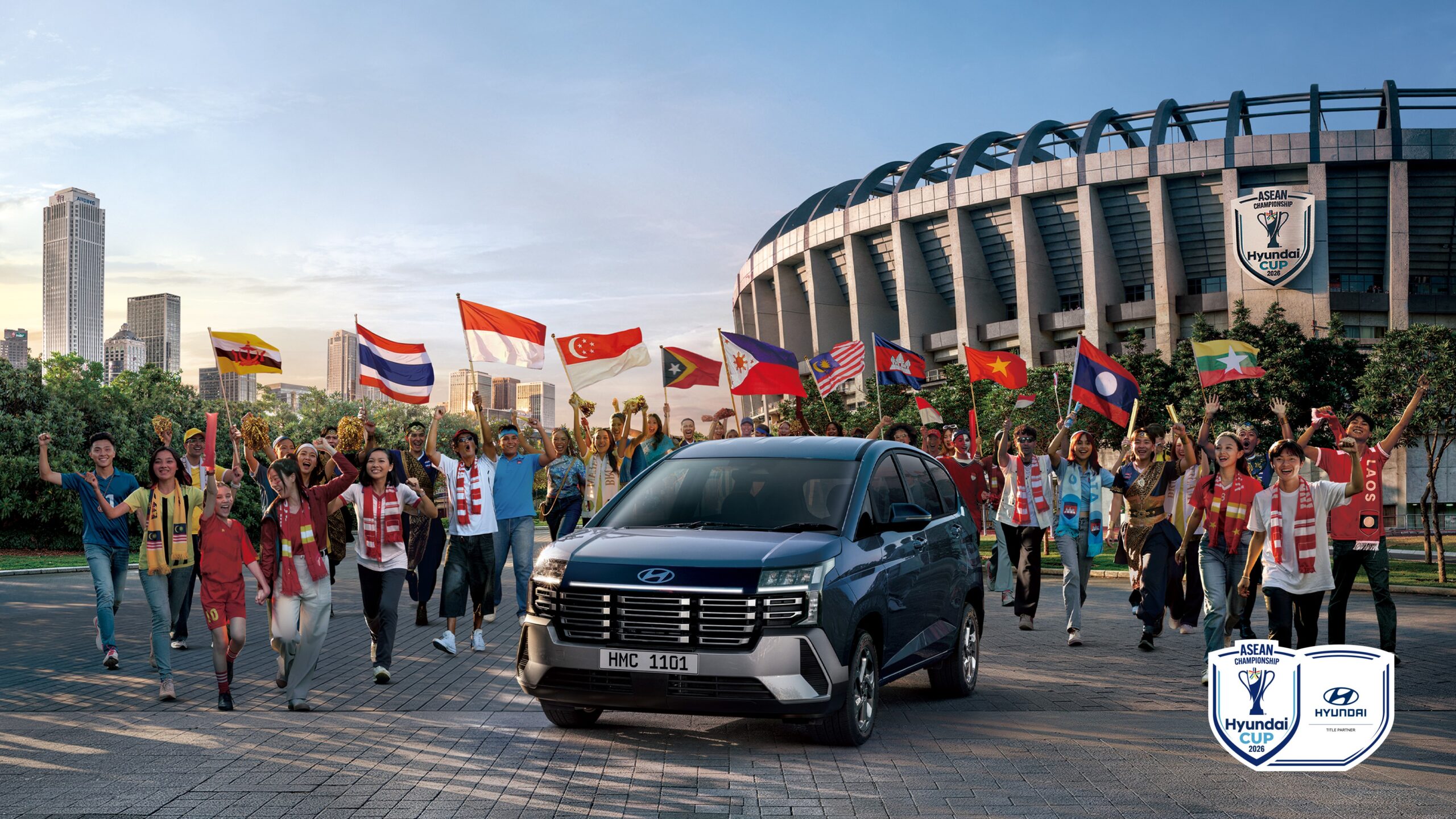
As the title partner of the ASEAN Hyundai Cup™ 2026, Hyundai Motor Asia Pacific has launched its “Driving ASEAN as One” campaign alongside the regional football tournament, which runs from July 24 to August 26, 2026. The campaign includes fan engagement activities such as dealership activations, community events, the ASEAN Hyundai Cup Trophy Tour, and Kids Escort programs that give young football fans the opportunity to walk onto the pitch with players before kick-off.
According to Hyundai Motor Asia Pacific, the initiative is intended to strengthen connections across Southeast Asia by bringing communities together through football while reinforcing the company’s long-term commitment to the region.
On the local front, Hyundai Motor Philippines has officially announced the appointment of Mr. Byung Goo Ko as its new President, effective July 27, 2026. He succeeds Mr. Jiho Son, whose tenure oversaw the expansion of Hyundai’s dealer network and product lineup in the Philippine market.
Mr. Ko brings more than 20 years of experience with Hyundai Motor Company, having held leadership roles in international market development, sales operations, and global business strategy across Asia Pacific, Europe, India, and the Middle East. Hyundai says his appointment marks the next phase of the company’s continued growth in the Philippines.
Since Hyundai Motor Philippines began operations in 2022, the brand has steadily expanded its local lineup with the introduction of new hybrid, electric, SUV, and MPV models while continuing to grow its dealership network nationwide. The latest announcements indicate that Hyundai remains committed to strengthening both its regional partnerships and its local operations.
Hyundai Motor Philippines expands its aftersales support with free vehicle inspections, diagnostics, and exclusive onsite offers this July 25-26.
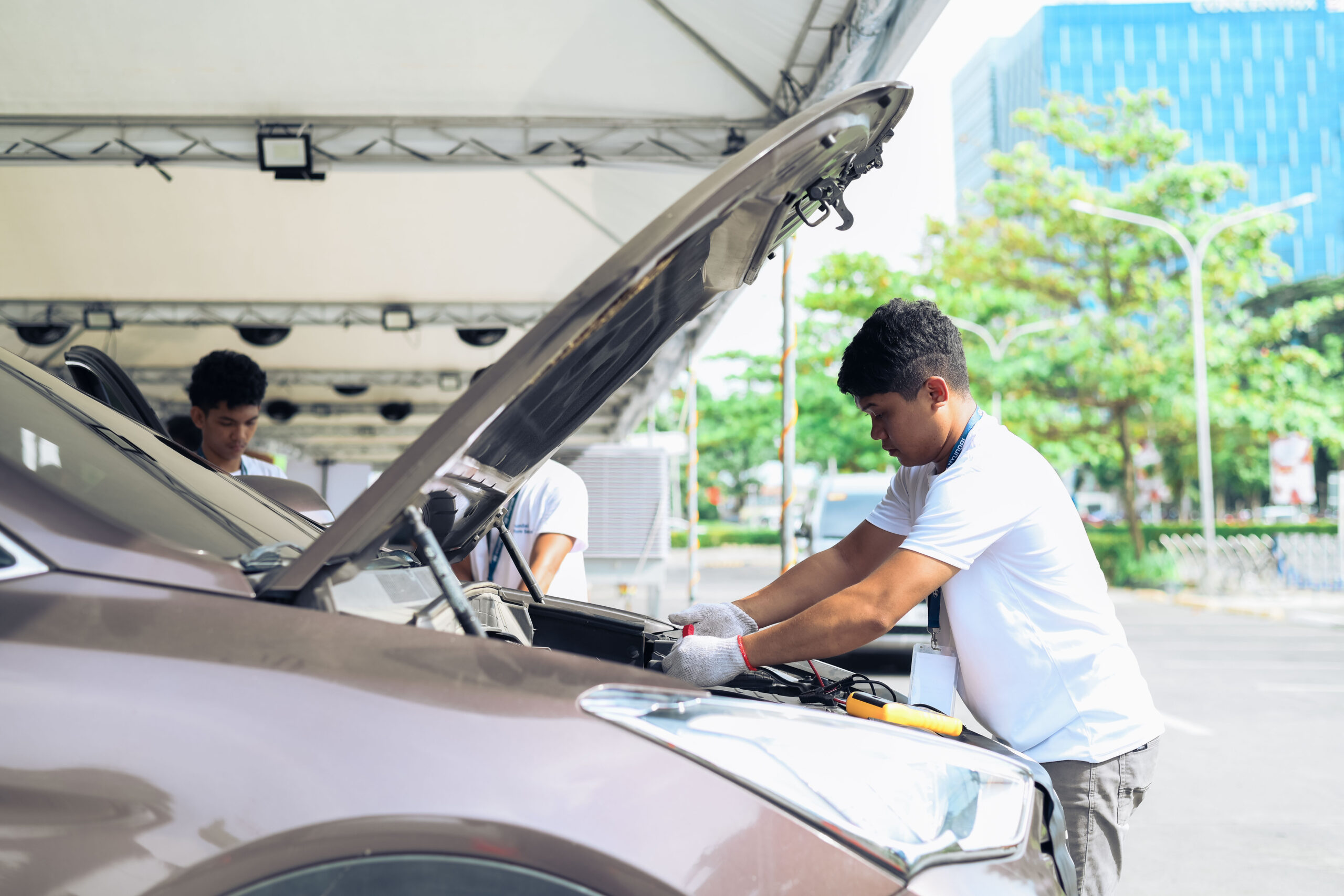
Hyundai Motor Philippines (HMPH) is once again taking its aftersales services closer to customers with the return of its Hyundai Mobile Workshop Weekend, scheduled for July 25 to 26. Now on its fourth run, the initiative aims to make vehicle maintenance more accessible by bringing Hyundai’s service expertise directly to communities across the country.
Customers visiting participating locations can take advantage of free vehicle health checks and a Global Diagnostic System (GDS) scan—Hyundai’s official diagnostic tool used to assess a vehicle’s condition. For those looking to complete additional maintenance, preventive maintenance services (PMS) and light general repairs will also be available onsite.
One of the biggest highlights of this year’s Mobile Workshop Weekend is that the free vehicle inspection isn’t limited to Hyundai owners. Motorists driving other vehicle brands are also welcome, making it an excellent opportunity for anyone looking to have their vehicle professionally checked at no cost.
The mobile workshop teams will be stationed in multiple locations across Metro Manila, Luzon, Visayas, and Mindanao, operating from 10:00 AM to 5:00 PM. Alongside the service activities, visitors can also expect exclusive promotional offers and test drive opportunities featuring Hyundai’s latest lineup.
Among the participating venues are MC Home Depot in Pasig, Washington Place in Dasmariñas, Metrogate Silang Estates in Cavite, Pavia Public Plaza in Iloilo, and Kantina Food Park in Valencia City, Bukidnon, with several additional locations spread nationwide.
Stay updated with Hyundai through @HyundaiMotorPhilippines on Facebook and Instagram.
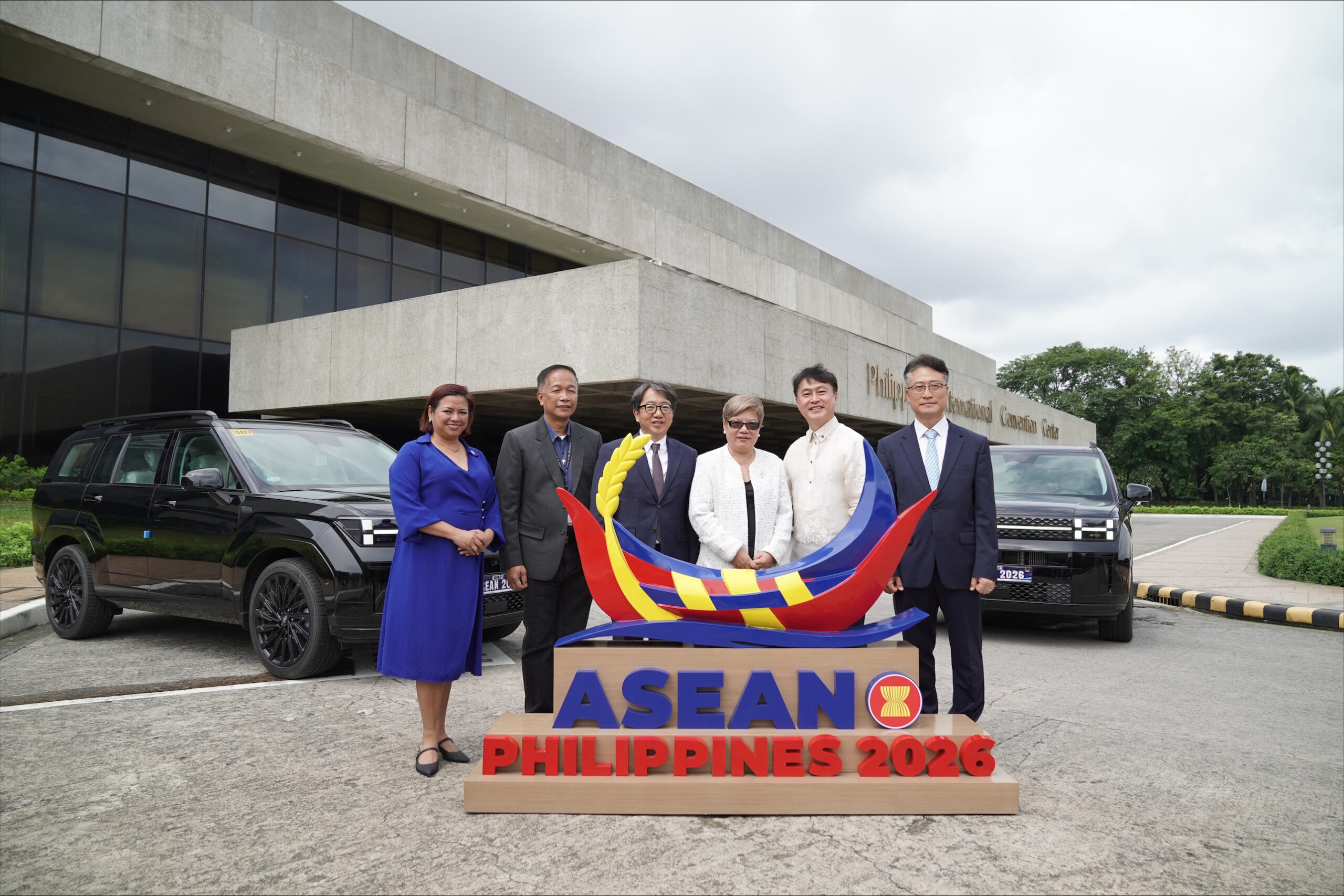
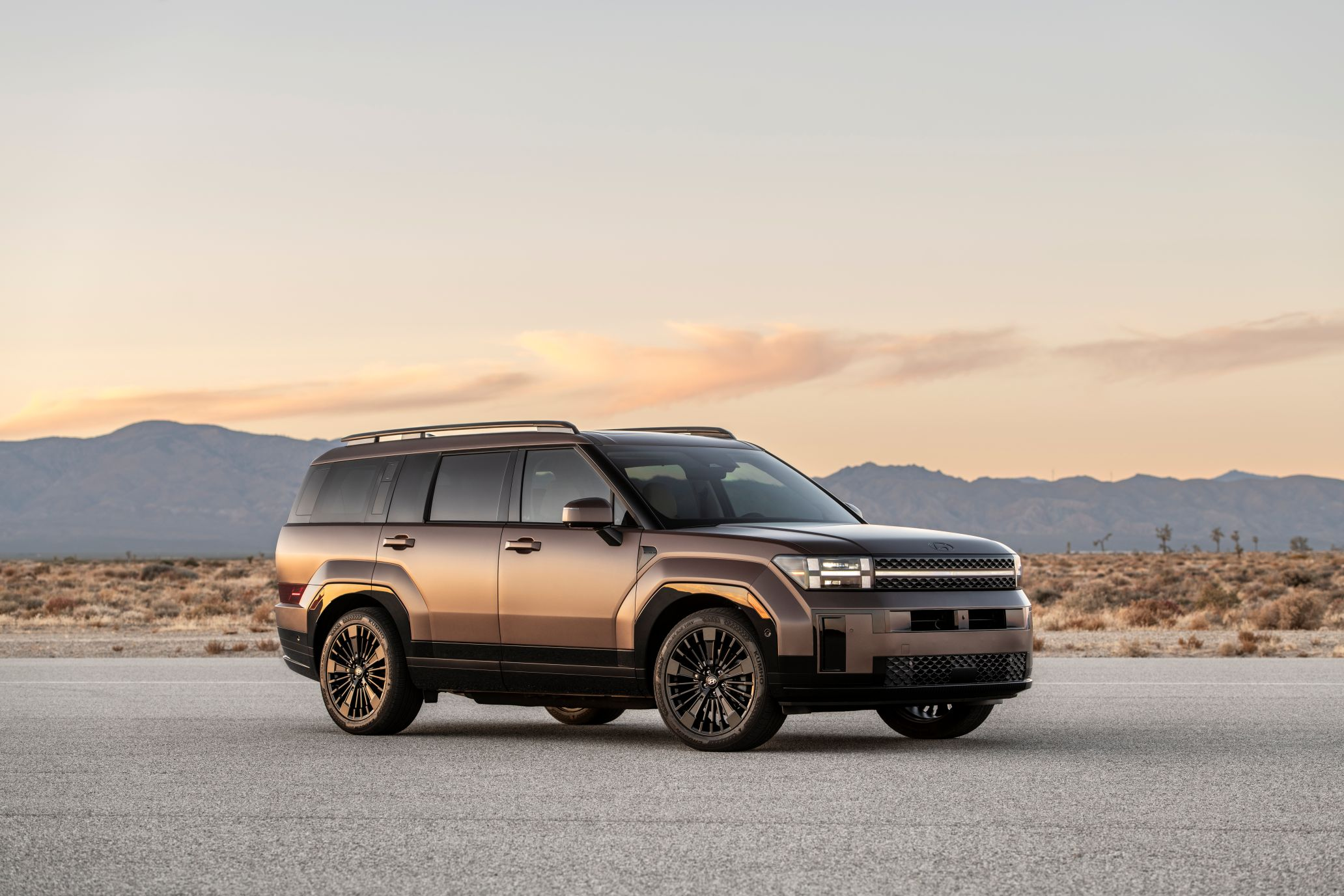
MANILA, Philippines — Hyundai Motor Philippines (HMPH) has signed an agreement with the ASEAN National Organizing Council (NOC) to provide 50 Hyundai Santa Fe units that will serve as official protocol vehicles for the 2026 ASEAN Summit and Related Summits in the Philippines.
The ceremonial signing was held on July 10, with representatives from Hyundai Motor Group, Hyundai Motor Philippines, the ASEAN NOC, and the Embassy of the Republic of Korea in attendance.
According to Hyundai, the fleet will be used to support operational personnel during the summit, which is expected to gather delegates from across the region and the world at the Philippine International Convention Center (PICC) later this year.
Beyond transportation duties, the partnership also highlights Hyundai’s continued involvement in national and regional initiatives focused on mobility, connectivity, and sustainability.
Hyundai Motor Group Senior Vice President for Global Policy Office Dong Jo Kim said the company hopes the vehicle support will contribute to a successful hosting of the ASEAN Summit while supporting ASEAN’s goals of innovation and sustainable mobility.
For HMPH President Jiho Son, the agreement reflects the trust placed in the brand and its commitment to supporting the Philippines on the regional stage.
“We are honored by the trust and confidence placed in Hyundai Motor Philippines. It is with great pride that we support the Philippines’ hosting of the ASEAN Summit as we strengthen our commitment to advance meaningful mobility.”
Mr. Jiho Son, HMPH President
< L-R (2nd row, standing): MGen. Potenciano Camba (ASEC. Head of Operations, ASEAN National Organizing Council), H.E. Sang-Hwa Lee (Ambassador of the Republic of Korea to the Republic of the Philippines), Dong Jo Kim (HMG Senior Vice President for Global Policy Office); L-R (1st row, seated): Undersecretary Ma. Hellen Dela Vega (Director-General of the ASEAN NOC) and Jiho Son (President, Hyundai Motor Philippines) >
The signing ceremony was attended by several key officials, including ASEAN NOC Director-General Undersecretary Ma. Hellen Dela Vega, ASEAN NOC Head of Operations MGen. Potenciano Camba (Ret.), Hyundai Motor Group executives, HMPH management, and Korean Ambassador Lee Sang-Hwa.
Hyundai clarified that the 50 Santa Fe units are being provided as in-kind support and will be returned to HMPH after the country’s ASEAN 2026 hosting period concludes.
Why the Santa Fe?
While Hyundai did not specify the exact variant mix, the Santa Fe’s combination of passenger space, comfort, safety features, and long-distance touring capability makes it a fitting choice for protocol and logistics duties during a major international event.
The move also gives the latest-generation Santa Fe additional visibility as one of Hyundai’s flagship SUVs in the Philippine market.
As preparations for the 2026 ASEAN Summit continue, the partnership places Hyundai among the automotive brands directly supporting one of the country’s most significant international gatherings in recent years.
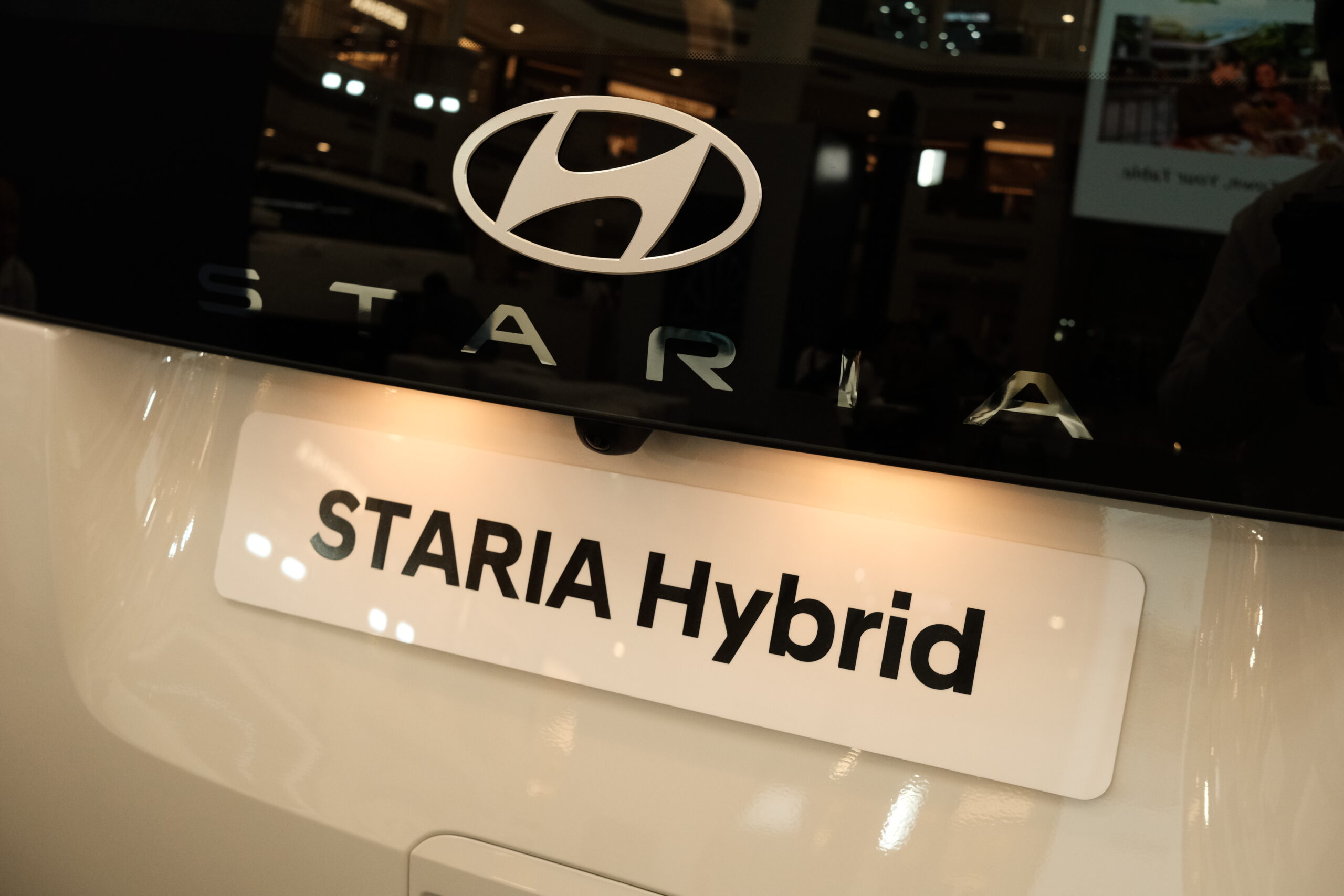
July 9, 2026 – Hyundai Motor Philippines has officially expanded its electrified lineup with the launch of the new Hyundai STARIA Hybrid, bringing hybrid power to one of the brand’s most distinctive people movers.
Unveiled at Alabang Town Center, the STARIA Hybrid added a new layer of efficiency and refinement to Hyundai’s large MPV offering. More importantly, it gave Filipino buyers a hybrid alternative without losing the space, comfort, and futuristic design that made the STARIA stand out in the first place.
For families, executives, shuttle users, and buyers who want a more premium way to move people, the STARIA Hybrid arrived as a smarter take on Hyundai’s already familiar MPV formula.
Photo : Kevin Peters | Road Spec PH
Same STARIA character, now with hybrid power
The biggest change in the new STARIA is found under the hood.
Instead of relying purely on a conventional diesel setup for the Philippines, the new STARIA Hybrid lineup uses Hyundai’s 1.6-liter turbocharged hybrid powertrain. This paired a gasoline engine with an electric motor, allowing the vehicle to deliver improved efficiency while retaining the smooth and easygoing character expected from a large MPV.
Large MPVs, or Vans, are often chosen for comfort, space, and convenience, but fuel efficiency is always part of the ownership conversation. With the STARIA Hybrid, Hyundai gave buyers a way to enjoy the STARIA’s premium passenger experience with the added advantage of hybrid assistance.
The new Hybrid variants bring better efficiency and hybrid tech, with its best-in-class fuel efficiency of 17.7 km/L, new 1.6 Turbo Gasoline Hybrid engine with 245 PS combined output, Euro 5 emission standard, and a 6-speed automatic transmission.
Photo : Kevin Peters | Road Spec PH
Seamless Connectivity Anywhere with Bluelink
The STARIA Hybrid is the first in Hyundai’s lineup to feature Bluelink, the brand’s advanced Connected Car Service platform that keeps drivers seamlessly connected to their vehicle. Through Hyundai Live Services, owners can access real-time traffic and weather updates directly via the infotainment system without the need to tether a smartphone. With data refreshed every two minutes, every journey becomes safer and more efficient.
The Bluelink system also supports online voice recognition, supporting users to send and receive text messages while keeping their focus on the road. Beyond the drive, it keeps owners informed with vehicle status, diagnostics, and health reports, while enabling remote control of climate settings, door locks, horn, and lights for effortless access even before entering the vehicle.
Photo : Hyundai Philippines
New 9-seater and 11-seater HEV options broaden the range
The STARIA has never been just about moving people from one point to another. Its main strength has always been how it makes the journey feel.
Inside, the STARIA Hybrid continued to offer the kind of open, airy cabin that made the model popular among buyers who prioritize passenger comfort. Its large glass area, spacious seating arrangement, and modern dashboard layout gave the cabin a more premium atmosphere than the usual utility-focused van.
With the new STARIA variant lineup we now have 5 HEVs and 1 Diesel Cargo variant.
Variants
Powertrain
Seating
Price
2.2 Diesel Cargo 6MT
Diesel
Cargo
₱1,499,000
1.6T HEV GL 6AT
Hybrid
9-Seater
₱1,999,000
1.6T HEV GL 6AT
Hybrid
11-Seater
₱2,079,000
1.6T HEV GLS 6AT
Hybrid
9-Seater
₱2,389,000
1.6T HEV Premium 6AT
Hybrid
9-Seater
₱2,999,000
1.6T HEV Premium Plus 6AT
Hybrid
7-Seater
₱3,199,000
The HEV GL, HEV GLS, and HEV Premium have 9-seater configurations while the HEV Premium Plus has the 7-seater configuration with captain’s chairs on the second row. The HEV GL also has an 11-seater configuration as well for more room for passengers.
Photo : Kevin Peters | Road Spec PH
Enhanced Driving Confidence
The New STARIA Hybrid is also equipped with Hyundai SmartSense, an array of advanced safety technologies, engineered with customer safety in mind. These include new features such as the Blind-Spot Collision-Avoidance Assist and Side Parking Distance Warning, helping drivers navigate with heightened awareness and delivering confidence when on the road. Supporting this is a set of six airbags strategically integrated throughout the cabin.
Collectively, all these features embody the New STARIA’s promise of safety, space, and smart mobility for all occupants.
Photo : Kevin Peters | Road Spec PH
With the launch of the new Hyundai STARIA Hybrid, Hyundai Motor Philippines has clearly signaled where the future of its premium people mover is headed.
The biggest takeaway is simple: the STARIA’s passenger lineup has officially gone hybrid. Aside from the lone 2.2-liter Diesel Cargo variant, every passenger model is now powered by Hyundai’s new 1.6-liter Turbo Hybrid system. Buyers also have more choices than before, with the lineup expanding from five variants to six, adding greater flexibility for families, businesses, and executive transport operators.
Of course, the move to hybrid power comes with a price increase across most passenger variants. Buyers moving from the outgoing diesel models will notice the higher sticker prices, and those who preferred the previous AWD Premium+ variants will also have to accept the shift to front-wheel drive on the new HEV lineup.
Photo : Kevin Peters | Road Spec PH
However, these changes shouldn’t simply be viewed as compromises because all in all, the STARIA has always stood out for its design and comfort and now with hybrid technology, Hyundai has made it smarter, more efficient, and more relevant for today’s Filipino buyers.
For buyers who are in the market for a new family van or premium MPV, the new STARIA Hybrid deserves serious consideration. While the initial investment is higher than the outgoing diesel models, the potential savings at the fuel pump—combined with the convenience of a self-charging hybrid that requires no external charging infrastructure—could make it a worthwhile long-term proposition.
Kevin, or Kev, is the Founder & Editor of Road Spec PH, a passion project born from a lifelong love of cars and automotive culture.
Long before working in the Philippine automotive industry, Kevin was already the kid who collected toy cars, spent countless hours playing Gran Turismo, and proudly told anyone who would listen that he wanted to be a race car driver when he grew up. While that racing career never quite happened, the passion for cars never went away.
When he’s not writing for Road Spec PH, you’ll probably find him playing racing simulators, adding to his die-cast car collection, or spending time with his 2016 Mitsubishi Lancer EX.
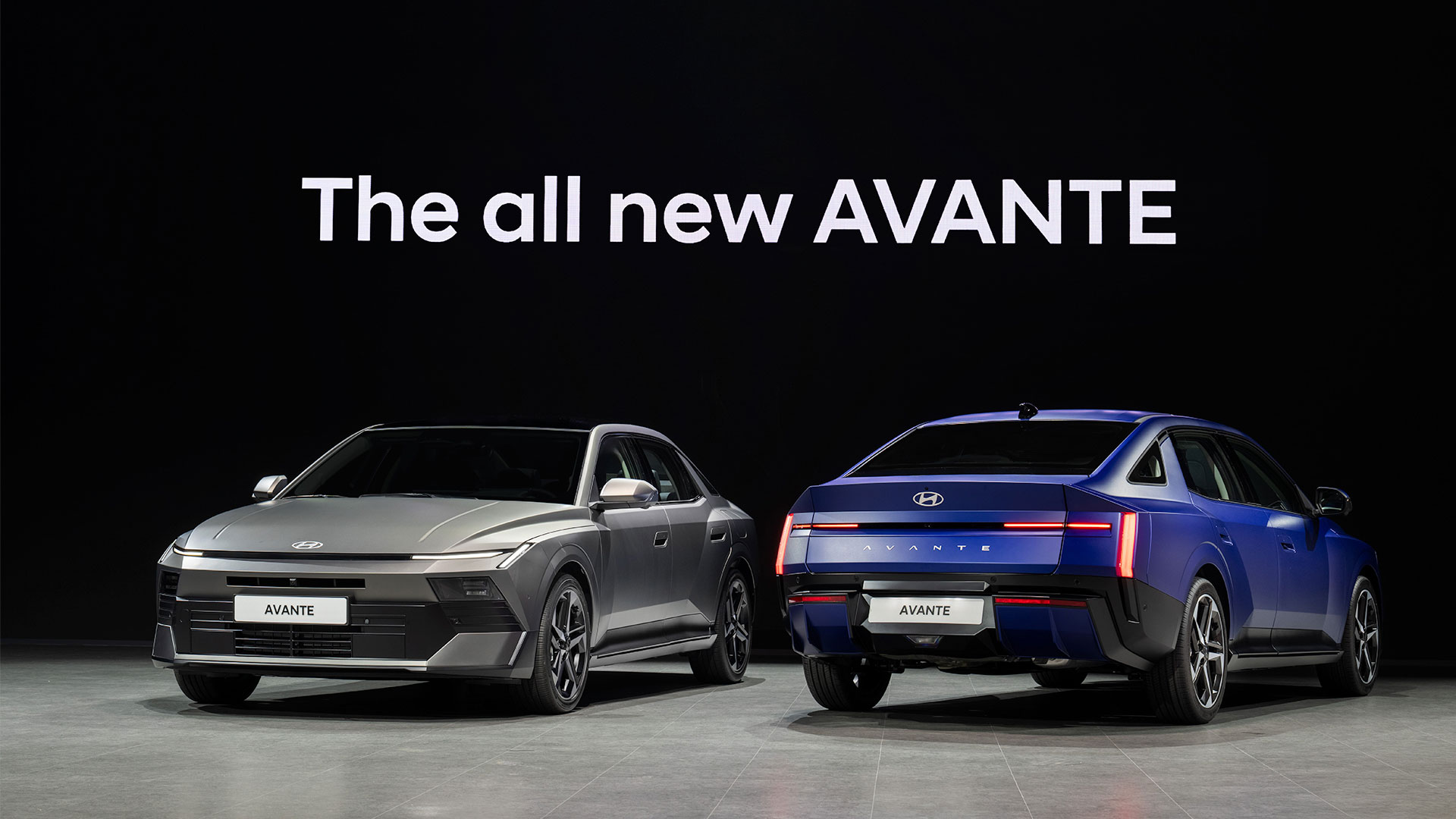
Hyundai has revealed the all-new Avante in South Korea, giving us our first clear look at what could eventually become the next-generation Hyundai Elantra for global markets.
For the Philippine market, this one matters more than it might seem and that is because the Elantra is already officially back in Hyundai Motor Philippines’ local lineup, offered with gasoline, hybrid, and N Line variants.
So the question is:
When could the all-new Avante eventually arrive here as the next-generation Hyundai Elantra?
A new generation for Hyundai’s compact sedan
The all-new Hyundai Avante made its debut in South Korea as the latest generation of Hyundai’s compact sedan. While final global-market details may still vary depending on region, the model already previews the next major step for the Elantra nameplate.
The new Avante brings a redesigned exterior, a more digital cabin, updated safety technologies, and Hyundai’s newer direction in software and infotainment. Reports from Korea also point to a stronger focus on AI-assisted in-car technology, suggesting that Hyundai wants its compact sedan to feel more advanced, not just more stylish.
Photo : Hyundai
Eyes on Hyundai Motor Philippines
The Philippine market has already received the current Hyundai Elantra, and its return gave Hyundai Motor Philippines a more complete sedan offering.
Locally, the Elantra is not just a basic compact sedan. Hyundai Philippines offers it with multiple personalities: a more accessible gasoline version, hybrid variants for buyers who want better fuel efficiency, and an N Line variant for those who want a sportier-looking and more performance-oriented option and that gives the Elantra a wider role in the lineup.
It can appeal to practical sedan buyers, fuel-conscious hybrid shoppers, and enthusiasts who want something sharper than the usual commuter car.
Because of that, the arrival of the all-new Avante in Korea gives Filipino buyers an early preview of what could eventually replace the current local Elantra.
Photo : Hyundai
When could it arrive in the Philippines?
For now, Hyundai Motor Philippines has not announced a local launch for the all-new Avante or next-generation Elantra.
But based on typical regional product timing, a Philippine arrival around late 2027 would not be impossible.
A Q3 or Q4 2027 window feels like a realistic Road Forecast estimate, especially if Hyundai rolls the model out first in South Korea, then other major markets, before eventually reaching Southeast Asian markets such as the Philippines.
That timeline would also give the current Philippine-market Elantra enough time to settle locally before a next-generation model arrives.
Still, this remains speculative. Hyundai Philippines may choose to bring it earlier, delay it depending on supply and market demand, or adjust the local lineup based on which variants make the most sense for Filipino buyers.
Photo : Hyundai
Photo : Hyundai
The bigger challenge: sedans versus crossovers
Even if the all-new Avante looks promising, the Philippine market is not as sedan-focused as it used to be.
Crossovers and SUVs continue to dominate buyer attention, especially in the ₱1-million to ₱2-million price range. Buyers who used to consider compact sedans now often look at small crossovers, compact SUVs, or even seven-seat MPVs.
That means the next Elantra will need to offer more than just good looks and it will need strong pricing, standout technology, good fuel efficiency, and enough premium appeal to convince buyers that a sedan can still be the smarter choice.
The good news is that Hyundai already seems to understand this. The new Avante’s focus on design, digital features, safety, and advanced in-car technology could help it stand apart from more basic sedan offerings.
From Fuel Anxiety to Electric Curiosity: Why Hybrids and EVs Are Winning Over Filipino Buyers
After years of hesitation, Filipino buyers are starting to see electrified vehicles as practical choices shaped by rising fuel costs, stronger brand support, and a market finally ready for change.
Not too long ago, the idea of seeing more hybrids and electric vehicles on Philippine roads felt more like a future forecast than a present reality. For many Filipino car buyers, the traditional formula was simple: buy a gasoline or diesel vehicle, maintain it properly, and once the warranty ends, have it serviced outside the casa to save on labor and parts. It was practical, familiar, and for decades, it worked. But the market is changing.
Today, hybrids and EVs are no longer just display units at motor shows or niche vehicles reserved for early adopters. They are now part of real buying conversations. More Filipino buyers are asking about fuel savings, battery warranties, charging options, hybrid systems, and whether it still makes sense to buy a purely internal-combustion vehicle in a market where electrified choices are growing quickly.
The bigger question is no longer whether hybrids and EVs will arrive, because they’re already here. The real question is: why are Filipino car buyers finally starting to lean toward them?
Photo : BYD Sealion 7 | BYD Cars Philippines
Photo : Toyota Corolla Cross Hybrid | Toyota Motor Philippines
From my own perspective, the shift feels dramatic.
During my time with Mitsubishi from 2017 to 2023, the EV market in the Philippines was almost invisible from a mainstream consumer standpoint. Electrified vehicles existed, but they were not yet part of the everyday buyer conversation.
Mitsubishi had the Outlander PHEV, which in many ways was ahead of its time locally. It showed that the technology was already possible. But the market around it was not ready yet.
Charging infrastructure was limited. Buyer awareness was low. Most Filipinos were still deeply comfortable with gasoline and diesel vehicles. And for many customers, the idea of paying a premium for a plug-in hybrid did not make immediate practical sense.
At the same time, there was still a strong stigma around China-made vehicles. For a long period, many Filipino buyers associated Chinese cars with being cheap, unproven, or risky. That perception was difficult to break, especially in a market where Japanese brands built decades of trust through reliability, resale value, and strong aftersales support.
So even if electrified technology was already entering the conversation, the local market was not yet fully listening.
Back then, the Outlander PHEV felt more like a preview of what could happen someday rather than a product that would immediately reshape the market. That “someday” now feels much closer.
Photo : Hyundai Tucson Hybrid | Hyundai Motor Philippines
Hyundai showed that the technology had arrived
When I moved to Hyundai, the shift became more obvious.
The arrival of models like the IONIQ 5 and IONIQ 6 showed that EVs were no longer awkward, experimental, or overly compromised. These were proper modern vehicles with strong design, advanced platforms, impressive technology, and a different kind of driving experience.
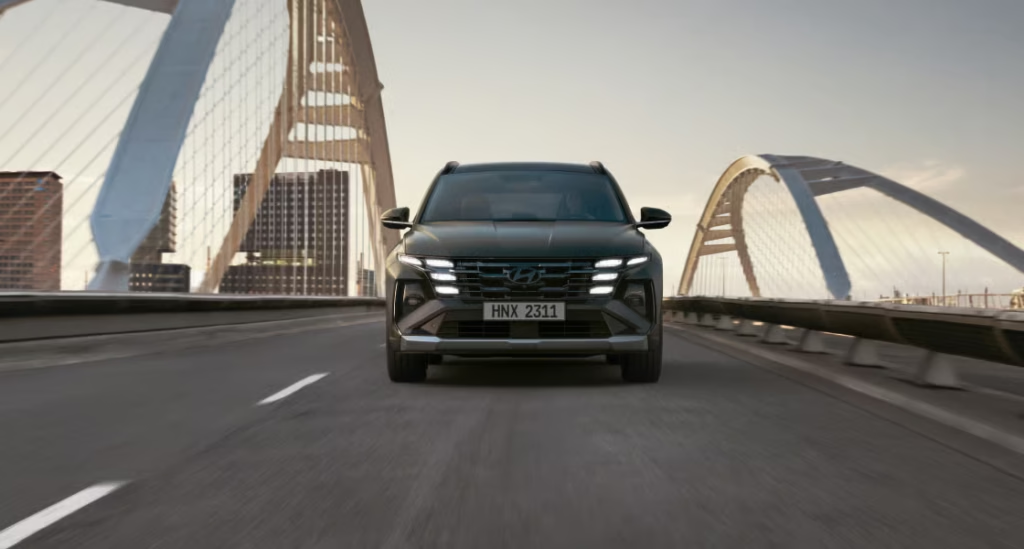
Hyundai’s electrified lineup also helped show that the transition would not be purely electric right away. Hybrid models such as the Tucson Hybrid and Santa Fe Hybrid made the technology feel more familiar to buyers who were not yet ready to fully depend on charging infrastructure and that matters most, specially for Filipino car buyers.
A full EV asks buyers to change more than just the vehicle, it asks them to think about:
Where they park,
Where they charge,
How far they drive,
Whether they can install a home charger, and
How comfortable they are with public charging availability
A hybrid, on the other hand, feels like a safer first step.
You still fuel it like a normal vehicle. You still drive it like a normal vehicle. But you get better efficiency, smoother low-speed driving, and a taste of electrified motoring without needing to plan your life around a charger.
That is why hybrids may end up being the real bridge technology for many Filipino buyers.
Fuel prices changed the conversation
For years, Filipino buyers would talk about fuel economy, but many still prioritized price, brand reputation, resale value, and familiarity. A fuel-efficient engine was nice to have, but it was not always enough to make buyers shift to a new type of powertrain.
Then fuel prices became harder to ignore.
When gasoline and diesel prices rise, the cost of ownership becomes more visible. Suddenly, the monthly fuel bill matters more. Daily commutes feel more expensive. Long drives require more planning. Even buyers who once dismissed hybrids start asking if the higher purchase price can be justified by lower running costs and this is where hybrids found their opening.
A hybrid does not need to convince a buyer to fully abandon the gas station. It only needs to show that a vehicle can consume less fuel while still fitting into the lifestyle they already know.
For a market like the Philippines, that is a powerful argument. It gives buyers a sense of progress without requiring a complete leap of faith.
Photo : BYD Cars Philippines
The BYD effect
One of the biggest reasons the local electrified market feels different today is the aggressive rise of BYD.
BYD did not enter the conversation quietly. It pushed into the market with strong pricing, a growing lineup, visible marketing, and products that made people rethink what a Chinese electrified vehicle could be.
That matters because BYD did more than sell cars. It helped change perception.
A few years ago, many Filipino buyers were hesitant about China-made vehicles. Today, people are actively considering BYD models, asking about DM-i technology, comparing them against Japanese and Korean rivals, and treating them as serious options and that shift is huge.
BYD’s momentum also indirectly helped other Chinese and Asian brands gain attention. When one brand successfully changes the conversation, it creates more space for others. Suddenly, buyers become more open to considering GAC, BAIC, Omoda & Jaecoo, Geely, MG, Chery, and even VinFast from Vietnam.
Not all of these brands will win equally. Some will need to prove their long-term reliability, parts availability, resale value, and service experience. But the door has already been opened.
For Filipino buyers who want more choices, that is good news.
More competition means better pricing pressure, more features, better warranty coverage, stronger dealer support, and faster technology adoption.
The Japanese brands still have a major advantage
Even with the rise of Chinese electrified vehicles, the Japanese brands still hold a powerful advantage in the Philippines: trust.
Toyota, in particular, has made hybrid technology feel approachable. Its hybrid models do not require plugging in, which removes one of the biggest psychological barriers for Filipino buyers. You get electrified driving without needing to think about charging stations and that simplicity matters.
Toyota’s hybrid strategy fits the Philippine market well because it does not force the buyer to jump straight into full EV ownership. It presents electrification as an upgrade to the familiar ownership experience rather than a complete lifestyle change.
Nissan also has a unique opportunity with e-POWER. The idea of an electric-driven vehicle with a gasoline engine acting as a generator is interesting because it gives drivers the feel of electric propulsion without the charging dependency of a full EV.
That is one reason the new Nissan X-Trail e-POWER is personally interesting to me. As someone who still enjoys driving a manual gasoline car, I can understand the appeal of a traditional ICE vehicle. But I can also see why a smooth, efficient electrified SUV would be tempting for daily use.
The hybrid route simply makes sense for where the Philippine market is right now.
CAMPI-TMA’s Top 10 brands (as of April 2026)are as follows:
Brand
Sales volume
1
Toyota
66,206
2
Mitsubishi
24,371
3
Suzuki
6,289
4
Nissan
5,323
5
Ford
4,877
BYD sits between Mitsubishi Motors Philippines (MMPC) which sold 24,371 vehicles, and Suzuki Philippines (SPH),which delivered 6,289 units to customers.
Aftersales support may become the real battleground
There is one part of the hybrid and EV conversation that I think deserves more attention: aftersales.
For decades, many Filipino owners followed the same ownership pattern. Keep the car serviced at the casa during the warranty period, then move to trusted third-party shops once the warranty ends. This is especially common because outside labor is usually cheaper, parts can be sourced more flexibly, and independent mechanics are familiar with traditional gasoline and diesel vehicles.
That formula is one of the reasons ICE ownership feels so practical in the Philippines. But hybrids and EVs may change that.
With electrified vehicles, the technology is more specialized. High-voltage batteries, electric motors, inverters, control modules, regenerative braking systems, and proprietary software are not things every neighborhood repair shop can immediately handle.
This creates a very different aftersales landscape.
For brands selling hybrids and EVs, this could be a major advantage. Buyers may be more likely to return to authorized dealerships for service, especially if they are concerned about battery systems, warranty coverage, diagnostics, software updates, and genuine parts availability.
In other words, electrification could increase casa retention.
From a business perspective, that is a major win for brands and dealers. From a customer perspective, it creates both reassurance and concern.
The reassurance is that trained technicians, specialized tools, and official parts should give owners more confidence. The concern is that buyers may feel locked into casa servicing longer than they would with a traditional ICE vehicle and this is where brands need to be careful.
If they want Filipinos to fully trust hybrids and EVs, they need to make aftersales support transparent, accessible, and reasonably priced. Battery warranties help, but they are only one part of the equation. Customers also need to know what regular maintenance costs look like, how long parts take to arrive, how many dealerships can service electrified vehicles, and what happens once the vehicle is out of warranty.
The technology may sell the car, but aftersales will determine long-term trust.
ICE vehicles are not going away overnight
Even with the rise of hybrids and EVs, it would be unrealistic to say that ICE vehicles are suddenly becoming irrelevant. They are not.
For many Filipino buyers, gasoline and diesel vehicles still make sense. They are familiar, easy to maintain, widely supported, and often cheaper to repair outside the casa. Parts availability is strong, mechanics are everywhere, and ownership habits are already well established and I understand that personally.
I own a 2016 Mitsubishi Lancer EX with a manual transmission. It is simple, reliable, relatively affordable to maintain, and still enjoyable to drive. There is something satisfying about a traditional gasoline car, especially one with a manual gearbox. It feels mechanical, direct, and familiar in a way many modern electrified vehicles do not. For enthusiasts, ICE vehicles still have emotional value.
The sound, the shifting, the maintenance culture, the tuning potential, and the connection to older automotive traditions are not things that disappear just because newer technology becomes available.
In the future, ICE vehicles may become less of the default choice for practical daily driving, but they may remain important as enthusiast cars, budget alternatives, or long-term ownership choices for people who value simplicity and lower repair costs.
The likely path: ICE to hybrid, then EV
The Philippine market probably will not jump from ICE to full EV overnight and many buyers will likely move from traditional ICE vehicles to hybrids first. Hybrids are easier to understand, easier to live with, and less dependent on charging infrastructure. They offer a practical middle ground between old and new.
From there, more buyers may eventually consider plug-in hybrids and full EVs once charging becomes more common, prices become more competitive, battery confidence improves, and more service centers become capable of supporting the technology.
Urban buyers with home parking and predictable driving routes may adopt EVs sooner. Provincial buyers, condo residents, renters, and long-distance drivers may prefer hybrids longer. Enthusiasts may continue to keep ICE vehicles for weekend use, project builds, or simply because they enjoy the driving experience and that is not a bad thing.
A healthy market does not need one technology to immediately replace everything else. What Filipino buyers need is choice.
More choices mean a better market
The arrival of more hybrids and EVs is good for the Philippine market because it forces everyone to improve.
Japanese brands can no longer rely only on long-standing trust. Korean brands can continue pushing design and technology. Chinese brands can challenge the market with pricing, features, and rapid product rollout. New players like VinFast can test whether Filipino buyers are ready to look beyond the usual automotive countries. This competition benefits customers and it can lead to better value, better features, more efficient vehicles, improved warranties, stronger aftersales programs, and faster infrastructure development.
For years, Filipino buyers had to choose mainly between what was familiar and what was affordable. Now, the market is slowly adding a third option: what is more efficient and future-ready.
That does not mean everyone should buy an EV tomorrow and it also does not mean ICE vehicles are suddenly bad choices. But it does mean the old assumptions are changing.
A few years ago, many Filipino buyers were lukewarm toward hybrids, skeptical of EVs, and hesitant about Chinese brands. Today, those same buyers are comparing fuel savings, reading about battery warranties, watching BYD reviews, checking Toyota hybrid prices, looking at Nissan e-POWER, and asking whether their next car should still be purely gasoline-powered. That is a major shift and it may only be the beginning.
Final Thoughts
The Philippine car market is entering a more interesting phase.
ICE vehicles still make sense, especially for buyers who value simplicity, affordability, and easier third-party maintenance. Hybrids are becoming the practical bridge for those who want better fuel efficiency without changing their ownership habits too much. EVs are becoming more convincing as prices, infrastructure, and brand support improve.
Personally, I still appreciate the honesty and simplicity of my Lancer EX. It is reliable, affordable to maintain, and connected to the kind of driving experience many enthusiasts still love. But I also understand why hybrids are becoming harder to ignore.
Photo : Kevin Peters | Road Spec PH
If I were to consider an electrified vehicle today, something like the new Nissan X-Trail e-POWER would definitely be on my radar. It represents the kind of transition that feels realistic for many Filipino buyers: electric-driven, efficient, but still practical for a market that is not fully ready to depend on charging alone.
The future of Philippine motoring may not be purely electric just yet but it is clearly becoming more electrified. And for Filipino buyers, that could mean better choices, stronger competition, and a market that finally moves beyond the old question of gasoline versus diesel.
Now, the bigger question is becoming: How electrified do you want your next car to be?
Kevin, or Kev, is the Founder & Editor of Road Spec PH, a passion project born from a lifelong love of cars and automotive culture.
Long before working in the Philippine automotive industry, Kevin was already the kid who collected toy cars, spent countless hours playing Gran Turismo, and proudly told anyone who would listen that he wanted to be a race car driver when he grew up. While that racing career never quite happened, the passion for cars never went away.
When he’s not writing for Road Spec PH, you’ll probably find him playing racing simulators, adding to his die-cast car collection, or spending time with his 2016 Mitsubishi Lancer EX.
Hyundai Motor Philippines, Inc. (HMPH) is encouraging customers to prioritize regular vehicle maintenance through its “Fuel Your Drive” Promo. Rewards are in store for participating customers who avail of Periodic Maintenance Service (PMS) or oil change, regardless of their vehicle’s year model, at authorized Hyundai dealerships nationwide.
Until July 15, 2026, Hyundai customers who avail of PMS and Change Oil services using Shell lubricant products will receive:
PHP 800 Shell Fuel Voucher
Free Vehicle Health Check
Free Global Diagnostic Scan (GDS)
Free Car Wash
“We at HMPH believe that consistent maintenance is key to keeping every journey safe and enjoyable. We would like to reward our customers who make it a point to return toour dealerships to care for their vehicles, while reaffirming our commitment to support them every step of the way.”
Mr. Cecil Capacete, HMPH Managing Director
The promo is open to all Hyundai customers at all authorized service centers nationwide until July 15, 2026.
The 2026 Hyundai SANTA FE is photographed near California City, Calif., on Feb. 24, 2025.
The 2026 Hyundai IONIQ 5 is photographed in Palm Springs, Calif., on Feb. 24, 2025.
2026 PALISADE, SANTA FE, and IONIQ 5 recognized for delivering where it matters most to families, from safety to everyday usability
Hyundai continues to stand out with family buyers, with three models, PALISADE, SANTA FE, and IONIQ 5, named to Kelley Blue Book’s 2026 Best Family Cars list, an annual recognition of vehicles that deliver for families. Evaluated against factors such as safety, reliability, efficiency and overall value, the recognition underscores Hyundai’s focus on building vehicles around what families prioritize every day, from peace of mind to real-world usability. The three Hyundai models represent a quarter of the vehicles recognized by KBB as the best for families.
“At Hyundai, families do not have to choose between flexibility, technology and efficiency, whether it is the ease of managing a full day in a three-row SUV or the quiet simplicity of driving an all-electric IONIQ 5, our vehicles are designed to support the way families move through real life, without compromise.”
Ricky Lao, director, product planning, Hyundai Motor North America.
Vehicles Designed for Family Life
Recognized for delivering on the everyday needs of families, PALISADE, SANTA FE, and IONIQ 5 each bring a unique combination of space, comfort, safety and flexibility. From PALISADE’s spacious three-row interior and thoughtfully designed storage to SANTA FE’s versatile layout that adapts between passenger and cargo needs, and IONIQ 5’s open, tech-forward cabin that makes daily driving easier, each vehicle is designed to simplify family life. Together, they reflect Hyundai’s focus on creating vehicles that support everything from daily routines to longer road trips with confidence and ease.
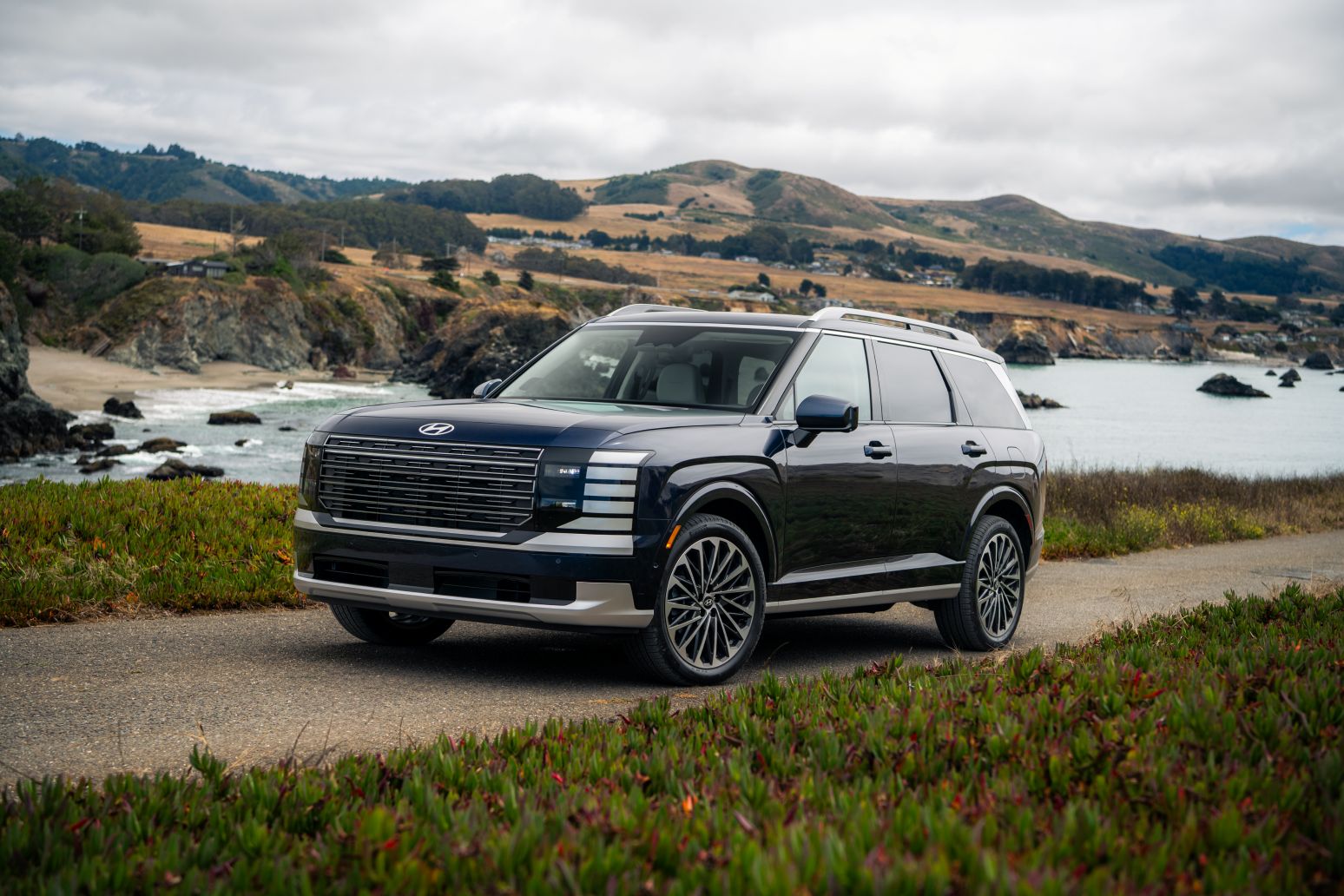
The 2026 Hyundai PALISADE is photographed in Sonoma County, Calif., on Aug. 5, 2025.