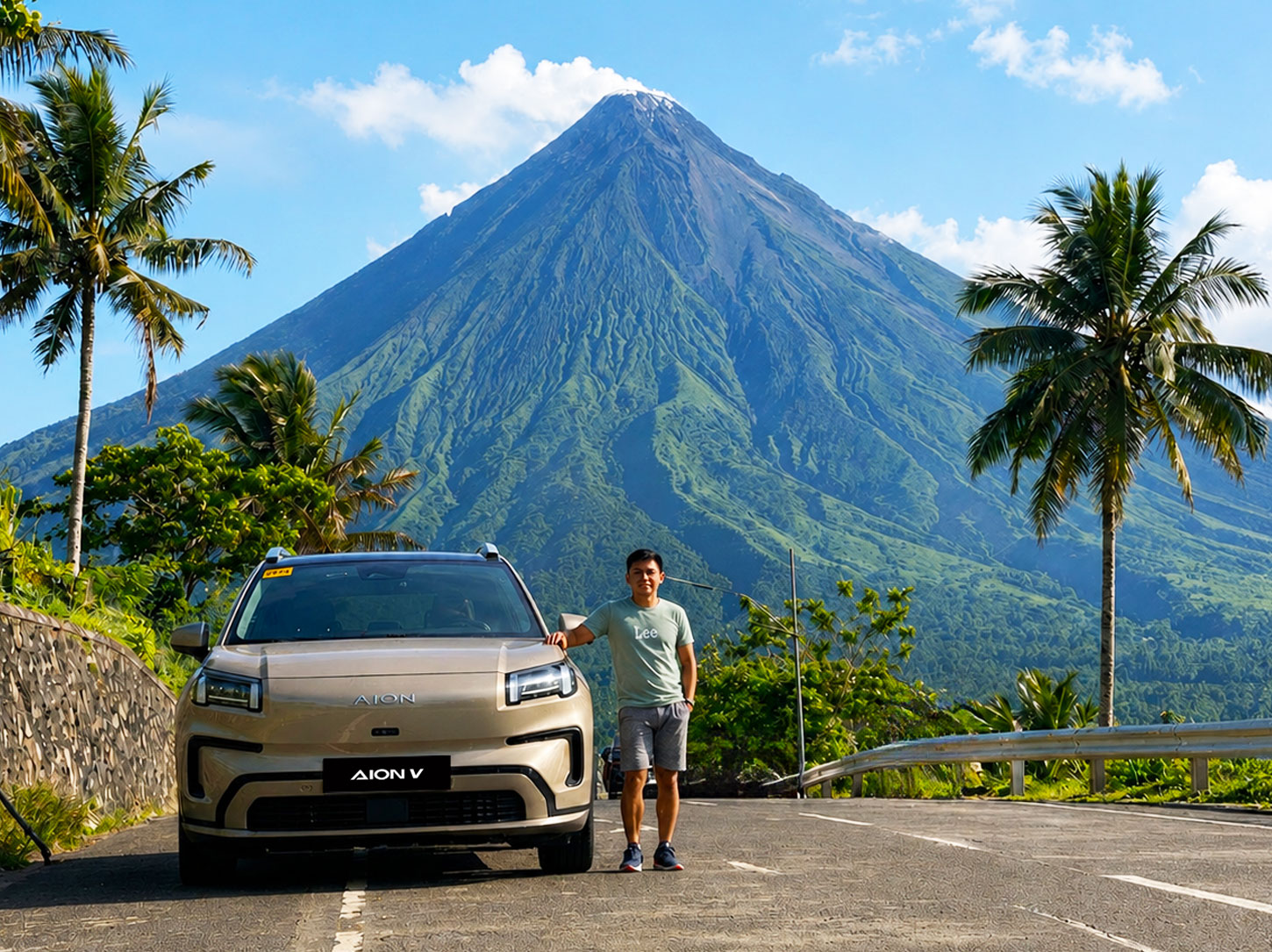
GAC International Philippines has shared the experiences of two GAC AION V owners who used their electric SUVs for inter-island travel, including one journey covering 1,492 kilometers across Luzon, Visayas, and Mindanao. Featured in the brand’s Life With GAC campaign, the accounts describe how charging stops and ferry crossings fitted into their trips. They offer a practical look at traveling beyond the usual urban routes in an electric vehicle.

A 1,492-kilometer journey with charging stops
AION V owner Romel Emperado completed the longer journey, passing through Samar and Leyte, where GAC says public charging infrastructure is still developing. He reported average energy consumption of 13.9 kWh/100 km while maintaining cruising speeds of 80–100 km/h, using regenerative braking, and selecting the vehicle’s power-saving mode. That figure is an owner-reported trip average rather than an independently verified efficiency test.
Emperado planned his charging around breaks and overnight stays, avoiding driving at night. “We just hung out at malls or slept at Airbnbs while the car charged,” he said in GAC’s release. The 1,492 km figure therefore represents the total journey, not the distance covered on a single charge.

Taking an electric SUV from Cebu to Mindanao
Another owner, Rommel Laranjo, used his AION V for a family journey from Cebu to Mindanao involving two roll-on/roll-off ferry passages. According to GAC, he arrived home with 36% battery remaining and a reported remaining-range estimate of 183 km, despite using the air conditioning throughout the day. The release does not specify his total trip distance or provide a complete charging itinerary.

Laranjo also uses the electric SUV for a 34-kilometer daily commute, with home charging supplemented by a solar setup. He highlighted the ability to keep the cabin cool while waiting for ferry embarkation without an idling combustion engine producing exhaust. His reported savings reflect his household’s charging arrangements, however, rather than a cost figure that applies to every EV owner.
For Filipino buyers considering an electric SUV, the useful takeaway is how charging was incorporated into each journey. Destination stops and overnight accommodation gave the owners opportunities to replenish the battery, while ferry crossings connected the road sections. These experiences suggest that inter-island EV travel is achievable with preparation, although charging access along the intended route remains an important part of the plan.