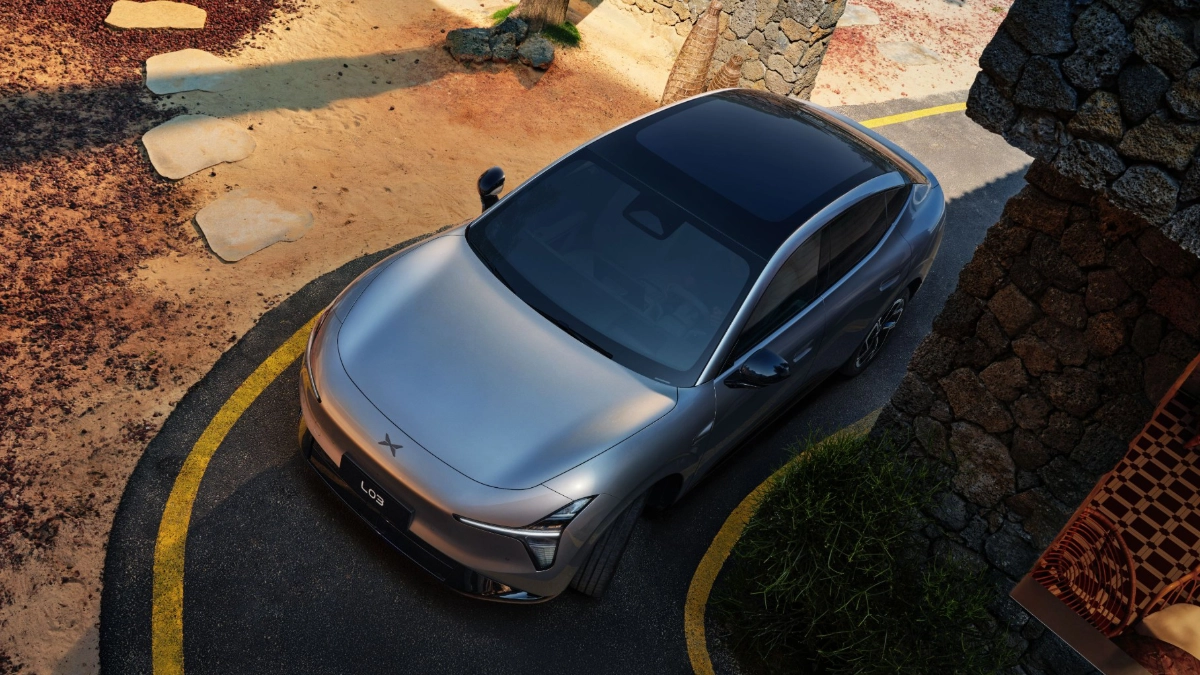
XPENG Philippines is preparing its September 2026 debut with the L03 crossover and X9 electric MPV, introducing two very different propositions to Filipino buyers. One could bring the brand within reach of shoppers considering their first electrified family car; the other aims considerably higher. The two-model launch plan has been announced, although final local pricing and variant details remain important pieces of the picture.
The arrival of another Chinese automotive brand is no longer enough to make a compelling buying argument. Filipino motorists have increasingly varied choices, and a large touchscreen or an impressive claimed range does not automatically make one vehicle the better purchase. The more useful question is what XPENG can offer that makes daily driving—and the years of ownership afterward—better.

Its emphasis on artificial intelligence and software gives us something worth examining. But those capabilities need to translate into practical benefits, not merely another set of acronyms to learn.
The XPENG L03 could be the one that matters most
The L03 deserves attention because of its potential price positioning. Top Gear Philippines has reported an expected starting price below ₱2 million, although this remains an indication rather than an announced Philippine SRP. If that positioning holds, the L03 could enter the shortlist of buyers comparing conventional crossovers, hybrids, plug-in hybrids, and battery-electric alternatives.
For a sense of its footprint, XPENG’s overseas specifications describe a five-seat crossover measuring 4,650 mm long, 1,920 mm wide, and 1,600 mm tall, with a 2,850-mm wheelbase. Those figures provide useful context, but they should not be mistaken for a finalized Philippine specification sheet. Its width, in particular, is something prospective owners should consider against their parking space and usual routes.

XPENG’s Philippine website advertises 539 liters of rear cargo space and a 102-liter front compartment. There are qualifications: the figures use a water-volume measurement method rather than the commonly quoted VDA block method, while the Chinese specification table assigns the front compartment to battery-electric versions, not range-extender variants. These numbers suggest useful storage potential, but an actual luggage test would tell us more than a brochure comparison alone.
The powertrain question remains particularly important. The overseas lineup includes both battery-electric and range-extender versions, but their existence does not establish that both will reach the Philippines.

That is why the L03 could be the more consequential launch. A competitively priced crossover with useful space and well-executed technology has a broader potential audience than a luxury flagship. The challenge will be delivering those strengths in the Philippine variants buyers can actually order.
The XPENG X9 makes the bigger statement
The seven-seat X9 occupies a different price bracket, with earlier Philippine reporting placing its indicative price around ₱4.5 million. That is premium-MPV territory, where buyers should expect convincing passenger comfort and ownership support—not simply a dramatic exterior. The figure is not yet a final local SRP.

More recent Philippine reporting identifies a front-mounted electric motor producing 235 kW and 450 Nm, paired with a 110-kWh battery and a claimed range of up to 615 km. XPENG’s official Hong Kong specifications list the corresponding long-range configuration at 615 km under WLTP testing. That overseas test-cycle reference provides context; it is not a promise of what a Philippine owner will achieve with passengers, luggage, air-conditioning, and varying road conditions.
The reported equipment also includes rear-wheel steering, dual-chamber air suspension, a powered third row that stows into the floor, and a 27-speaker audio system. Those features give the X9 a credible technology-showcase role, but their usefulness matters more than their number. Rear-wheel steering and flexible seating, for example, deserve as much attention during an evaluation as the entertainment system.

For a family buying a large electric MPV, the real questions remain straightforward. Is the third row comfortable enough to use regularly? How easily can everyone get in, how much luggage remains with all seats occupied, and how conveniently can the vehicle be charged between trips?
XPENG is selling AI—but what will it do here?
The technology pitch becomes more interesting when we move beyond the brochure. XPENG’s Philippine X9 page promotes voice interaction, parking assistance, and driver-assistance functions, while also warning that equipment can vary by model, trim, and market. That makes the exact list of locally enabled functions an essential launch-day question.

How will the available systems behave around motorcycles filtering between lanes, jeepneys making frequent stops, or vehicles merging into small gaps? What happens when lane markings fade or heavy rain reduces visibility? These are questions for controlled evaluation, not claims that any system can independently negotiate every Philippine traffic situation.
The distinction matters: XPILOT is driver assistance, not autonomous driving. XPENG itself states that the system cannot handle every traffic, weather, and road condition, and that the driver must remain attentive and intervene when necessary. An AI label does not change that responsibility.

The less dramatic software functions could prove just as valuable. Voice commands that understand local users, navigation that handles Philippine destinations properly, and menus that make everyday controls easy to reach would all improve the experience. XPENG advertises over-the-air updates, but buyers should assess the functions available at delivery rather than purchase on the assumption that a missing capability will arrive later.
The real test starts after the launch
Another notable part of XPENG’s entry is its operating structure. The company is establishing XPENG Philippines as a direct subsidiary overseeing national sales, marketing, distribution, and retail operations. That creates a direct manufacturer presence, although it does not mean every dealership is company-owned or automatically guarantee excellent aftersales service.

There are already support services being advertised. XPENG’s Philippine service page lists remote diagnostics, service booking, genuine parts, and round-the-clock roadside assistance. These are useful starting points, but prospective owners still need clear information about coverage, service locations, response arrangements, and the precise vehicle and battery warranty terms.
The Philippine electrified-vehicle market is getting crowded. XPENG is betting that technology can help it stand out. What matters next is whether that technology makes the ownership experience better.